
What kind of generator do I need for my house? Most homes need a standby generator for automatic whole-house power, or a portable or inverter generator for a few essentials. A standby unit is wired to your panel and starts on its own. Portable and inverter units are rolled out and connected by hand. Meyers Electric offers all three types for homes in Rice Lake and across northwest Wisconsin.
How many types of generator are there for a home?
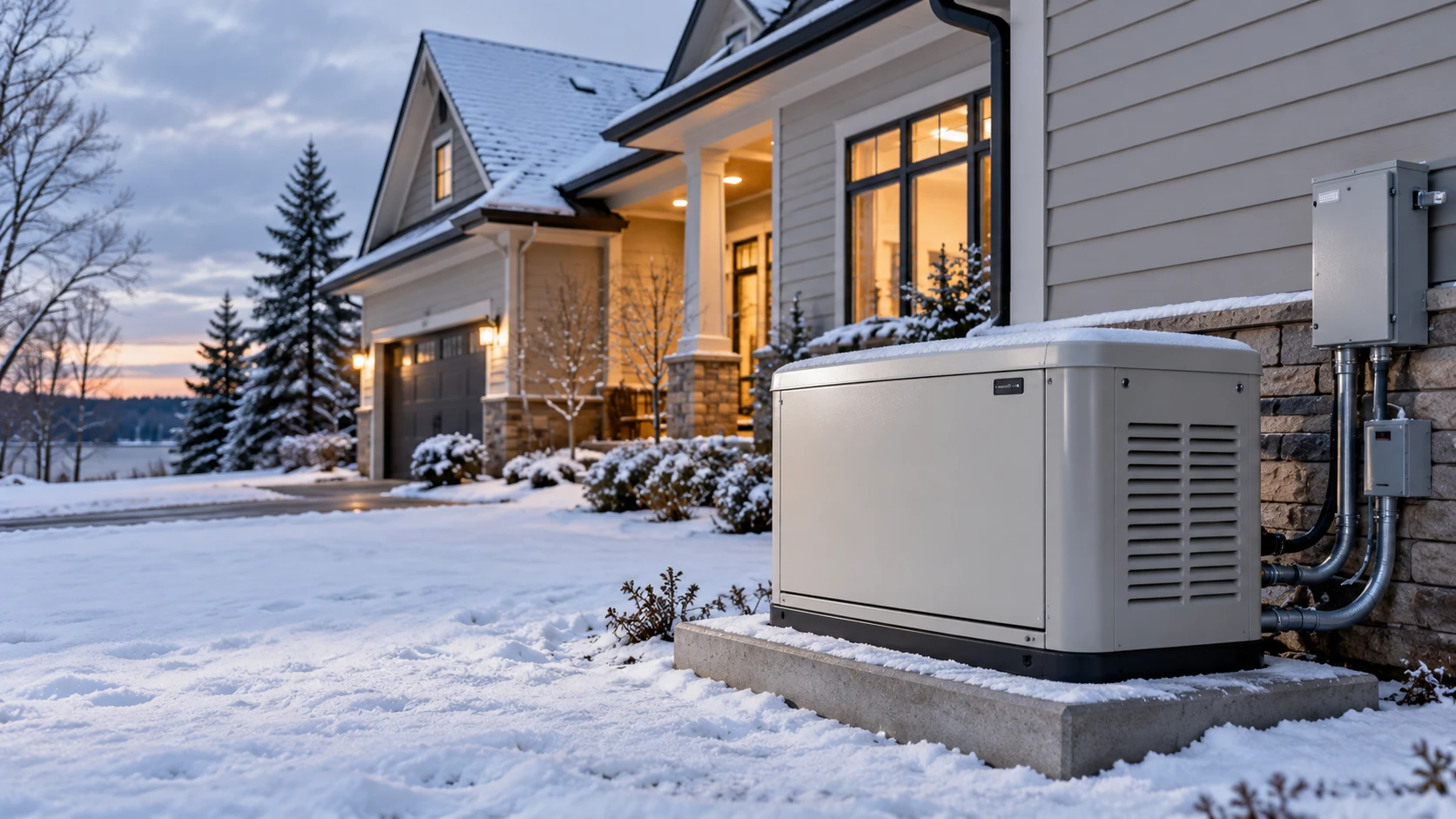
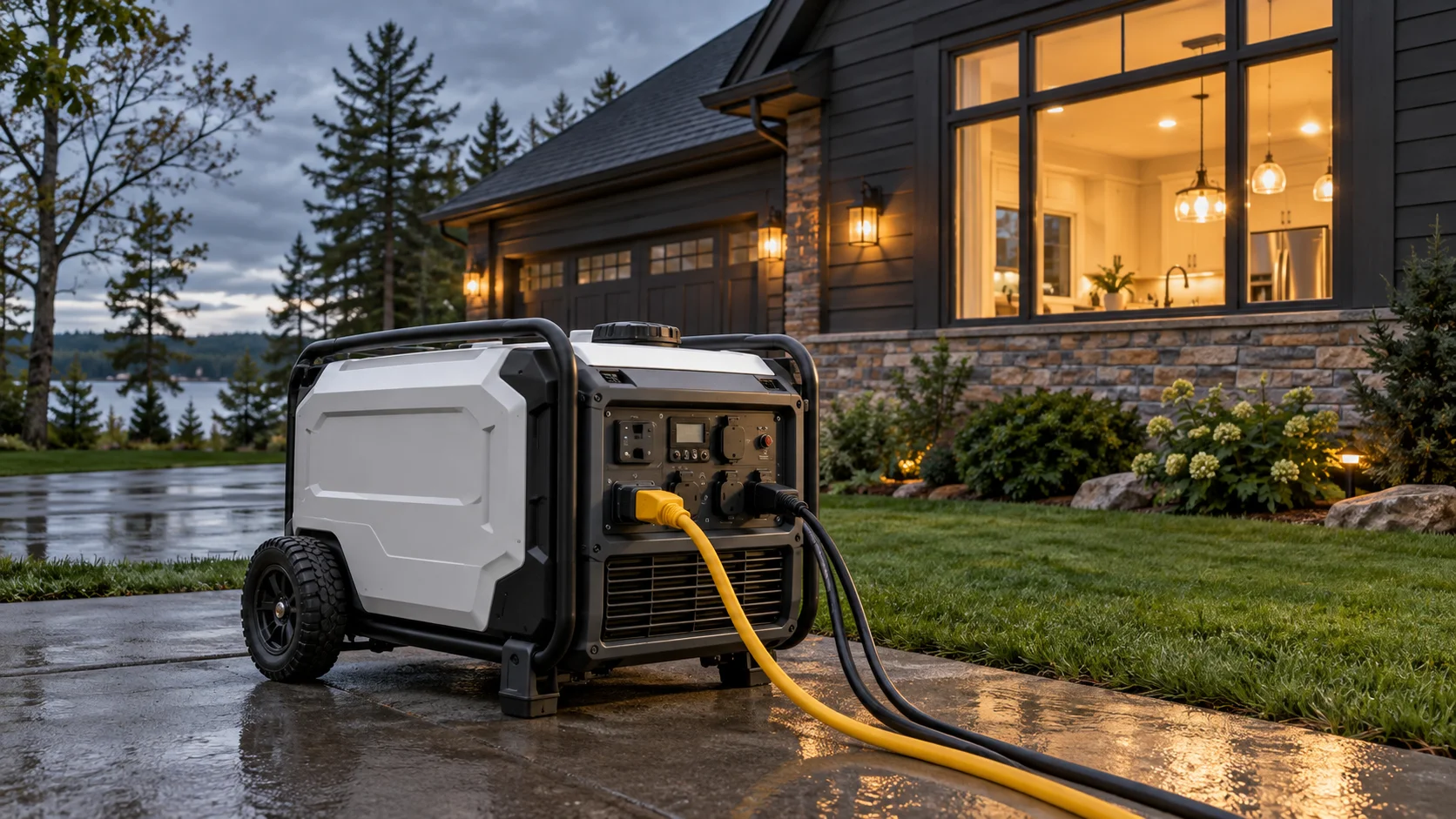
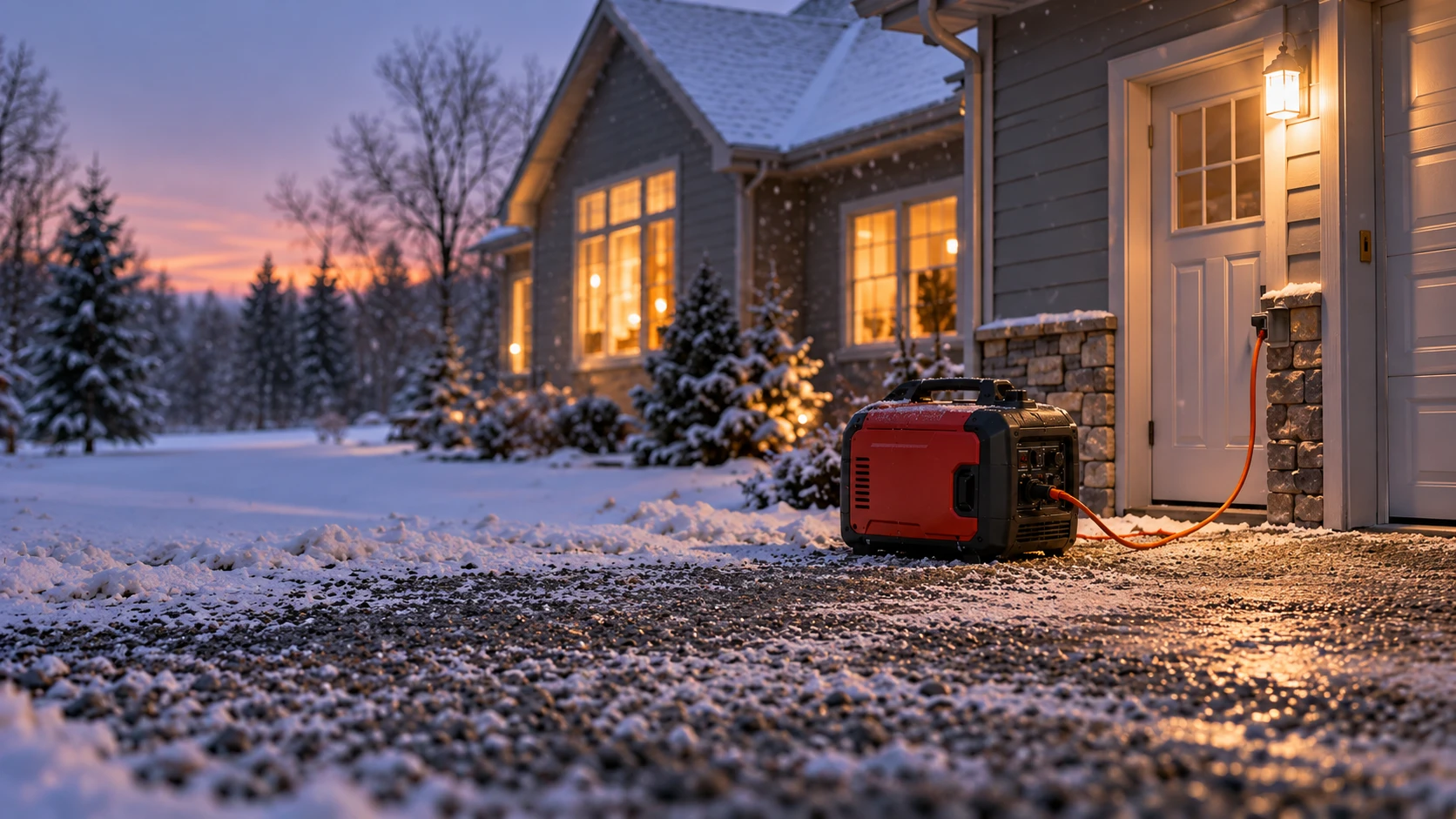
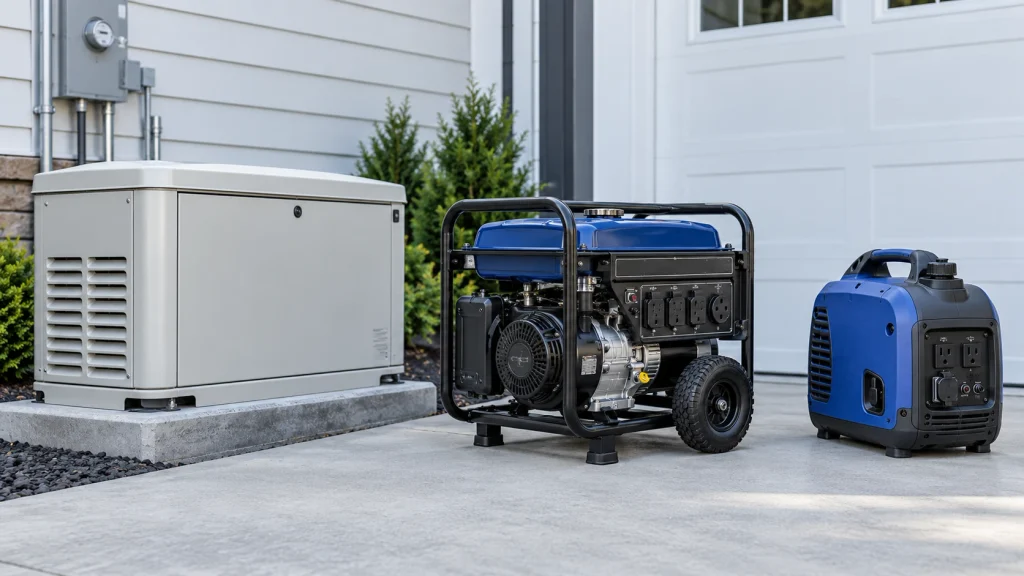
Homes use three main types of generator: standby, portable and inverter. A standby generator is a permanent unit that starts automatically. A portable generator is a wheeled, engine-driven unit that you start by hand. An inverter generator is a portable unit that makes cleaner, steadier power at lower output.
| Type | How it starts | Fuel | Best for | Limits |
|---|---|---|---|---|
| Standby | Automatically, through a transfer switch | Natural gas or propane | Whole house or critical circuits, long outages | Needs a licensed electrician, a permit and a fuel supply |
| Portable | By hand | Gasoline, some models dual fuel | A refrigerator, lights and a few outlets for short outages | Outdoor use only. You fuel it and connect it |
| Inverter | By hand | Gasoline, some models dual fuel | Electronics, small loads, quiet neighborhoods | Lower output. Not a whole-house unit |
Dual fuel means the unit runs on gasoline or propane. Meyers Electric lists several dual-fuel models on its generator installation services page.
What is a standby generator, and is it right for your house?
A standby generator is a permanently installed generator that senses a utility outage and starts on its own. An automatic transfer switch moves your home onto generator power within seconds. It typically connects to a natural gas or propane line, according to Angi’s generator guide.
Standby is the kind of generator your house needs if any of these are true:
- Your outages run long, or storms hit your area hard.
- You rely on a well pump or sump pump.
- Nobody is home to start a unit by hand.
- You want the furnace running without a trip outside in the cold.
Meyers Electric installs Cummins QuietConnect standby systems. The line is built for quiet operation, remote monitoring from your phone, and warranty coverage that can extend up to 10 years.
The tradeoff is upfront work. A standby install needs a pad, a fuel connection, a transfer switch, a permit and an inspection. We cover how the automatic start works in our post on a generator that starts automatically.
Can a portable generator power a house?
A portable generator can power part of a house, not all of it. It runs a refrigerator, lights and a few outlets well. It cannot run every circuit at once, and it must stay outdoors. Connecting it to your home’s wiring takes a licensed electrician and proper transfer equipment.
A portable generator fits best when:
- Outages are short and rare.
- You only need a few essentials, like the refrigerator and a sump pump.
- Budget matters more than automatic start.
- You are comfortable fueling and starting it in bad weather.
Reviewed explains the setup difference plainly: a portable unit plugs into your house through an inlet box, while a standby unit is wired directly into the system. The top of the Meyers Electric portable lineup is the Onan P9500DF, a 9,500-watt dual-fuel unit.
How much a portable unit can carry depends on your loads. Our guide to what size generator you need walks through that math.
Is an inverter generator enough for a home?
An inverter generator is enough for essentials only. It converts engine power into clean, stable electricity, which protects electronics, and it runs quieter than a conventional portable. Its output is smaller. Reviewed notes an inverter could power a refrigerator, but not much else.
Meyers Electric lists these inverter models:
- Onan P2500i: 2,500 watts, gasoline
- Onan P4500i: 4,500 watts, gasoline
- Onan P4500iDF: 4,500 watts, dual fuel
- Onan P5000iDF EFI: 5,000 watts, dual fuel with electronic fuel injection
An inverter works well for a lake cabin, a small shop or a home with light needs. It also suits neighborhoods where noise matters.
What generator can power a whole house?
A standby generator is the type built to power a whole house. A large portable unit can run many circuits when an electrician wires it in, but homes that want everything on at once, including central air and electric heat, use standby. Whether any one generator can carry your home depends on your biggest loads.
So can a generator power a house? Yes. The real question is how much of the house, for how long, and who starts it. Answer those, and the type follows.
What type of generator do I need for my house?
How to choose a generator comes down to six questions, answered in order. Each answer narrows the type of generator you need. Then confirm it with a licensed electrician before you buy.
- How long will outages run? Short outages favor portable or inverter. Multi-day outages favor standby.
- Who will run it? If nobody is home, or you travel, you need an automatic standby unit.
- What must stay on? List the furnace blower, well pump, sump pump and refrigerator. Water and heat loads push toward standby.
- What fuel do you have? A natural gas line or propane tank supports standby. Gasoline suits portable and inverter units, and you must store it safely.
- What are your noise and space limits? Inverters run quietest. Standby needs a pad and clearance from the house.
- What is your budget and timeline? Portable costs less upfront. Standby costs more and takes longer to install.
Use this table to match your situation to a type:
| If this describes you | Choose |
|---|---|
| Long outages, well pump, nobody home to start a unit | Standby |
| Short outages, a refrigerator and a few lights | Portable |
| Electronics, a small cabin, or a quiet street | Inverter |
| Seasonal lake home you can’t check in a storm | Standby with remote monitoring |
Not sure which type fits your home?
Meyers Electric reviews your loads and your property, then recommends a type. See our generator installation services or contact us in Rice Lake.
What does Wisconsin change about choosing a generator?
Wisconsin adds cold, rural loads and storm outages to the question of what kind of generator your house needs. A winter outage puts the furnace blower, well pump and sump pump on your generator at the same time. Someone must also refuel a portable unit in the cold. Those conditions push many northern Wisconsin homes toward standby.
The U.S. Energy Information Administration reports that Wisconsin customers averaged 91.3 minutes of outage in 2024 without major events, and 266.1 minutes with them. That compares with 611.3 minutes nationally when major events are counted. This measure, called SAIDI, is an average across all customers. An average spreads a few long storm outages over everyone, so it says little about your own street.
Other Wisconsin factors to weigh:
- Rural and farm loads: Barn motors and ventilation need their own plan. See our agricultural electrical services.
- Lake and seasonal homes: A cabin you visit only part of the year benefits from remote monitoring.
- Campgrounds and rentals: Properties with guest loads need commercial-grade planning. See our campground and recreation electrical work.
- Code: The Wisconsin Department of Safety and Professional Services says the state is adopting the 2023 National Electrical Code, effective September 1, 2026. Generator hookups fall under the optional standby rules in NEC Article 702.
- Utilities: Your outage history depends on your provider, such as Xcel Energy, Barron Electric Cooperative or Rice Lake Utilities.
How do you use a portable or inverter generator safely?
Run a portable or inverter generator outdoors only, well away from the house. The U.S. Consumer Product Safety Commission estimates portable generators were linked to 765 non-fire carbon monoxide deaths from 2009 through 2019. Carbon monoxide (CO) is an invisible, odorless gas in engine exhaust.
Follow these rules:
- Place the unit at least 20 feet from the home, with exhaust pointed away.
- Never run it in a garage, shed, basement or on a porch.
- Look for a model with a CO shut-off feature, as the CPSC advises.
- Keep working CO alarms in the home.
- Never plug a generator into a wall outlet to power the house wiring. That backfeeds the lines and can injure a utility worker.
Call a licensed electrician to install the inlet and transfer equipment. Do not attempt this connection yourself. If a surge damaged equipment on a past outage, read our post on a generator causing power surges.
Why should a licensed electrician choose and connect your generator?
Generator work involves your panel, a fuel supply, permits and inspections. A licensed electrician checks your real loads, sizes the transfer equipment and files the permit. A wrong guess can leave you with a unit that trips under load or an install that fails inspection.
Meyers Electric handles the full job. Our page lists load analysis, permitting, installation, maintenance and remote monitoring as part of the service. After installation, the Meyers PowerGuard plan covers annual inspection and testing. If you also want protection for the rest of your home’s electronics, see our guide to whole-house surge protection.
Ready to choose?
Talk to a licensed Meyers Electric electrician about how to choose a generator for your home. Start with our generator installation services or call (715) 234-3901. We serve Rice Lake and northwest Wisconsin.
FAQs
What does dual fuel mean on a generator?
Dual fuel means the generator runs on gasoline or propane. You pick whichever you have on hand. Propane stores longer than gasoline, which helps if the unit sits unused between outages. Several Onan models on the Meyers Electric lineup are dual fuel.
Is a standby generator worth it for a cabin I only use part of the year?
Often, yes. A cabin outage can go unnoticed for days, and a frozen pipe or a failed sump pump does damage while you’re away. A standby unit with remote monitoring starts itself and reports its status to your phone. A portable unit does nothing unless someone is there to run it.
How often does a standby generator need service?
Once a year at minimum. An annual inspection and performance test catches problems before storm season. Meyers PowerGuard schedules this and keeps the unit in line with manufacturer warranty requirements, per the Meyers Electric service page.
Can I start with a portable generator and upgrade to standby later?
Yes. Tell the electrician at the first visit that standby may follow. The panel and transfer work can then be planned so the upgrade doesn’t repeat earlier labor.
Does Meyers Electric install generators near Rice Lake?
Yes. Meyers Electric serves homes, farms, businesses and municipal facilities across northwest Wisconsin, and its page offers same-day residential service in Rice Lake.
Do I need to tell the utility about my generator?
Ask your electrician. Utility rules vary by provider, and a properly installed transfer switch keeps your generator isolated from utility lines. Your installer handles the permit.