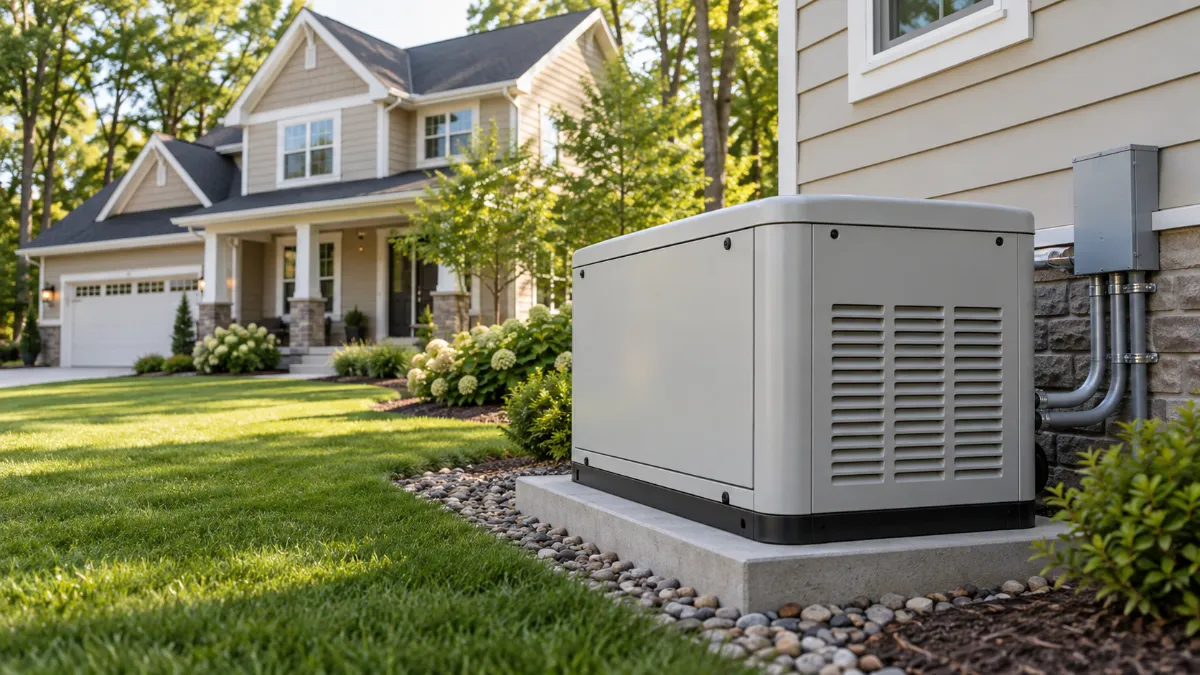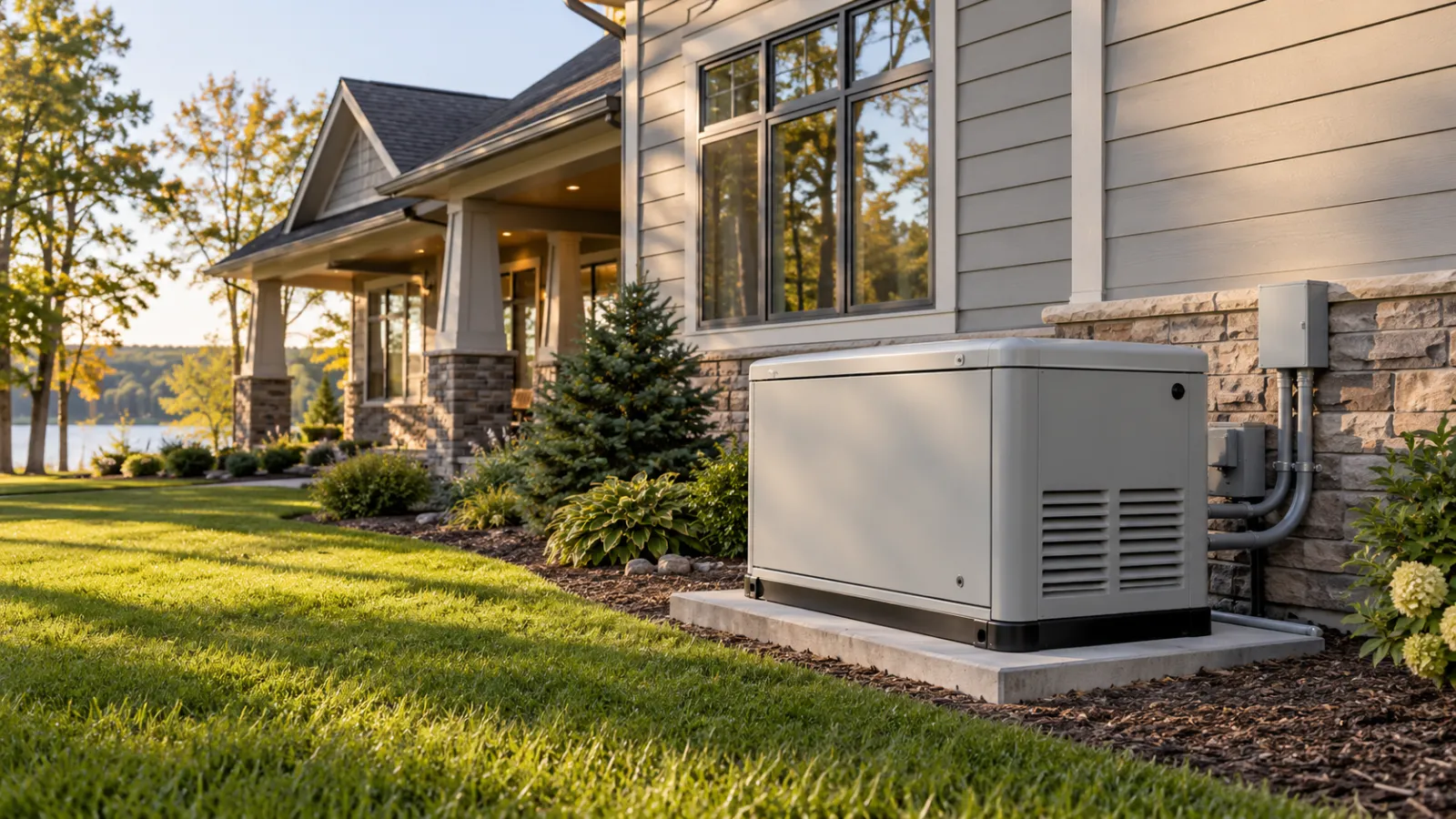

How much does a whole house generator cost? Most homeowners pay $6,000 to $11,000 installed, and systems over 20 kW or with long fuel runs cost $9,500 to $24,000, according to HomeGuide. Cummins says a dealer estimate typically starts around $6,000. In Rice Lake and across northwest Wisconsin, your price depends on generator size, fuel type and the distance from your gas meter or propane tank to the pad.
A whole house generator, also called a standby generator, is a permanently installed unit that starts on its own when utility power fails. An automatic transfer switch moves your home onto it within seconds.
Key takeaways
- Most whole house generators cost $6,000 to $11,000 installed. Units over 20 kW or long gas runs push that to $9,500 to $24,000.
- The generator itself is roughly half the bill. Labor, the transfer switch, gas line, pad and permit make up the rest.
- Rural northwest Wisconsin homes often add cost through propane tanks, long fuel runs and trenching.
- Plan for $200 to $650 a year in maintenance and fuel on top of the purchase.
- A free on-site load calculation is the only way to get a real number for your home.
How much does a whole house generator cost installed?
A whole house generator costs $6,000 to $11,000 installed for most homes. That covers the unit, the transfer switch, labor, the pad, permits and startup. Larger units and long fuel runs push the total to $9,500 to $24,000.
Unit price versus installation labor
Installation is close to half the bill. HomeGuide puts the unit at $3,000 to $6,000 and labor at $3,000 to $5,000 for a typical job. Over 20 kW or with long distances, the unit runs $4,500 to $12,000 or more and labor runs $5,000 to $12,000 or more.
Why quotes vary so much
Two whole house generator cost quotes for the same 22 kW unit can differ by thousands of dollars. The gap usually sits in the work around the generator:
- How far the pad sits from the electrical panel
- How far the pad sits from the gas meter or propane tank
- Whether the panel needs an upgrade
- What type of transfer switch is installed
- Whether the quote includes the permit, the pad and startup testing
Ask every contractor for a line-item quote. A low number with missing line items is not a low price.
What is included in a whole house generator installation price?
A complete installed price includes the generator, an automatic transfer switch, electrical wiring, a pad, the fuel connection, a permit and commissioning. Each piece has its own cost range. The table below shows typical 2026 ranges.
| Cost item | Typical range |
|---|---|
| Generator unit (2 to 24 kW) | $3,000 to $6,000 |
| Installation labor | $3,000 to $5,000 |
| Automatic transfer switch, installed | $600 to $2,500 |
| Electrical wiring | $6 to $8 per foot |
| Natural gas line | $12 to $25 per foot |
| Propane tank | $400 to $1,800 |
| Concrete pad | $150 to $400 |
| Permits | $80 to $450 (up to $1,500 in some municipalities) |
| Panel upgrade, if needed | $1,000 to $3,000 |
| Cold-weather kit | $130 to $500 |
| Wireless monitor | about $200 |
How much does a whole house generator cost by size?
Whole house generator cost rises with kilowatt (kW) size. A kilowatt is 1,000 watts of output. A 10 to 14 kW unit installs for roughly $4,500 to $8,000 on natural gas. A 20 kW unit runs $8,000 to $12,000. A 38 kW unit runs $14,000 to $20,000.
| Size | What it typically runs | Natural gas, installed | Propane, installed |
|---|---|---|---|
| 10 to 14 kW | Essentials: lights, refrigerator, sump pump, well pump, one AC unit | $4,500 to $8,000 | $4,800 to $8,500 |
| 20 kW | Most circuits in an average home | $8,000 to $12,000 | $8,500 to $12,500 |
| 22 to 26 kW | A large home, up to about 3,000 sq ft | $7,500 to $14,000 | $8,000 to $14,500 |
| 38 kW | Very large homes and shops | $14,000 to $20,000 | $15,000 to $21,000 |
Source: HomeFortify ROI, 2026 installed ranges. Models in these ranges include the Cummins RS13A and RS20A.
How much does a generator cost for a 1,500 sq ft house?
A 1,500 sq ft house that backs up essentials only fits the 10 to 14 kW class. Installed, that is about $4,500 to $8,000 on natural gas. Square footage is a rough guide. Your appliances, well pump and furnace blower decide the real size.
How much does a generator cost for a 2,000 sq ft house?
A 2,000 sq ft house that backs up essentials fits the same 10 to 14 kW class. Add central air and most circuits, and a 20 kW unit becomes the better fit at $8,000 to $12,000 installed. Cummins recommends a free on-site consultation for accurate sizing, because an undersized unit may not power every circuit and an oversized unit runs inefficiently. For sizing detail, see our guide on what size generator you need.
What raises generator costs in Rice Lake and northwest Wisconsin?
Rural distance, fuel availability and winter conditions raise whole house generator costs here. Homes outside natural gas service need propane. Long runs from the road, lake lots and farm sites need more trenching and wire. Cold climates add equipment.
- Propane instead of natural gas. Propane installs cost $500 to $1,000 more than natural gas. A new tank adds $400 to $1,800.
- Long fuel runs. Each extra 10 feet of gas line adds $100 to $300.
- Trenching. Burying wire and gas line across a rural lot takes time, and frozen ground makes it slower. Meyers Electric handles this with its own digging and trenching crew.
- Cold-weather equipment. A cold-weather kit adds $130 to $500 for reliable winter starts.
- Older panels. An older or full panel may need an upgrade of $1,000 to $3,000 before a transfer switch can go in. Our post on overloaded electrical panels explains the warning signs.
- Bigger loads. Hobby farms, well pumps, shops and lake homes with heat tape or water systems push the size up.
Want a real number for your home? Meyers Electric installs Cummins standby generators across northwest Wisconsin with a load analysis, permit and startup included. See our generator installation services or request a free estimate.
Is natural gas, propane or diesel cheaper for a whole house generator?
Natural gas is usually the lowest-cost fuel for a whole house generator to install and run. Propane costs a bit more up front and more to fuel. Diesel units cost the most and suit farms and larger loads more than homes.
| Fuel | Unit price (2 to 24 kW) | Annual fuel, 20 kW unit |
|---|---|---|
| Natural gas | $3,000 to $6,000 | $180 to $300 |
| Propane | $2,000 to $6,000 | $350 to $600 |
| Diesel | $5,000 to $18,000 | Not listed |
If your home has natural gas service, use it. If it does not, propane works well. Propane delivery also adds a supply to schedule before winter storms.
What are the ongoing costs of a whole house generator?
The ongoing cost of a whole house generator is annual maintenance and fuel. Professional maintenance runs $200 to $650 a year. For a 20 kW unit, HomeFortify lists total annual cost at $380 to $650 on natural gas and $550 to $950 on propane.
Maintenance matters beyond cost. A generator that fails to start in a January outage has no value. Skipped service can also put the manufacturer warranty at risk.
The Meyers PowerGuard generator care plan covers:
- Annual inspection and performance testing
- Early detection of problems
- Manufacturer warranty compliance
- Priority service during outages
What permits and codes apply to a generator installation in Wisconsin?
A standby generator installation in Wisconsin needs an electrical permit and an inspection, and a licensed electrician must do the electrical work. Wisconsin’s electrical code is SPS 316, which now follows the 2023 National Electrical Code (NEC).
Wisconsin adopted the 2023 NEC
The Wisconsin Department of Safety and Professional Services (DSPS) adopted the 2023 NEC in September 2026, replacing the 2017 edition. Electrical Contractor magazine reports the change took effect on the day of signing. It adds whole-home surge protection requirements.
NEC rules that shape a generator job
- Article 702 covers optional standby systems, the category a home generator falls under.
- Section 702.5 requires transfer equipment that prevents your generator from feeding power back onto the utility lines. This protects line workers.
- Article 445 covers generators themselves.
Do not wire a generator into your panel yourself. Backfeeding a utility line can kill a lineworker, and the work requires a licensed electrician and a permit.
Utilities and fuel connections
Your utility may be Xcel Energy, Barron Electric Cooperative or Rice Lake Utilities. Confirm any utility requirements before the install.
Pairing a generator with whole house surge protection is a smart step under the new code. Our post on generators causing power surges explains why.
Is a whole house generator worth the cost?
A whole house generator is worth the cost when outages put heat, water, food or safety at risk. In rural Wisconsin, that covers well pumps, sump pumps, furnaces and freezers in winter.
How often does the power go out in Wisconsin?
The U.S. Energy Information Administration (EIA) reports Wisconsin averaging 230 minutes of outage per customer per year including major storms, and 84.2 minutes without them. The U.S. average is 262.6 and 120.8 minutes. See the EIA reliability table.
Statewide averages hide rural lines. A home at the end of a long rural feeder can see more outages than the state average shows.
Does a generator add home value?
No formal study sets a figure. Real estate professionals quoted by Bob Vila estimate 50 to 80 percent of the cost comes back at sale. These are anecdotal estimates, and the article is sponsored by Kohler. Treat resale value as a bonus, not the reason to buy.
What is the cheaper alternative?
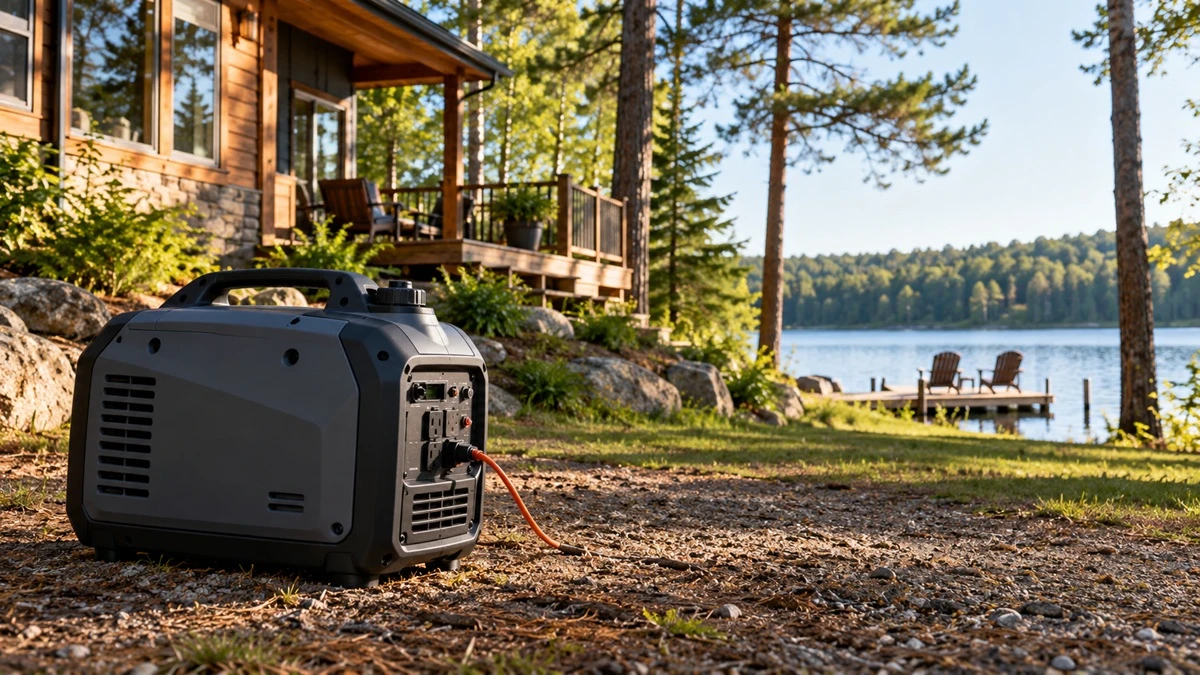
A portable generator costs $500 to $2,500, plus $400 to $1,300 for a transfer switch, per HomeGuide. It costs far less up front. You then fuel it and start it by hand, in the dark and the cold. Portable units suit short outages and a short list of loads.
How do I get an accurate whole house generator quote?
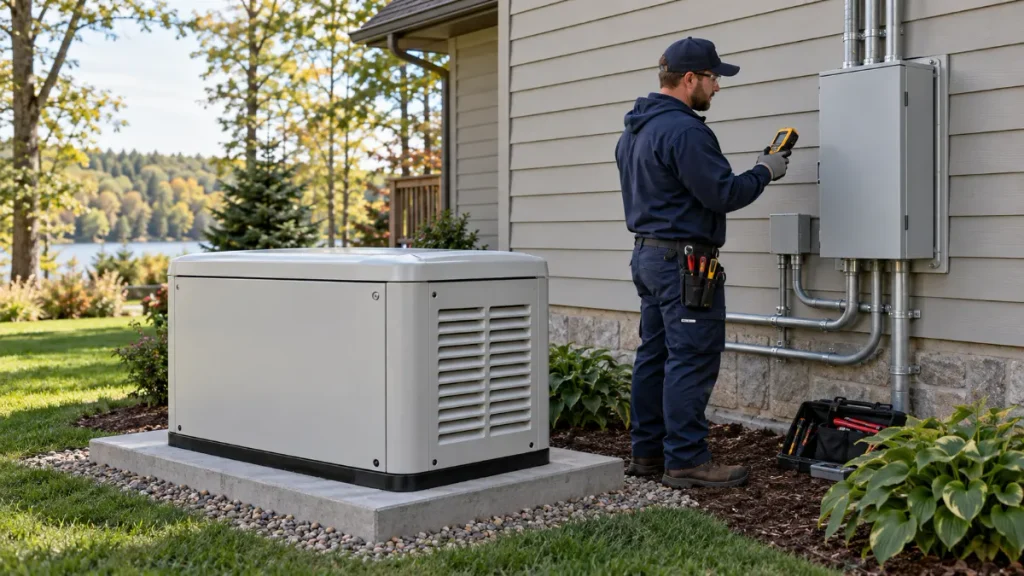
Get an accurate quote by booking a site visit, because phone estimates cannot see your panel, your gas meter or your pad location. A good contractor runs a load calculation and gives you one line-item price.
- List what must run. Furnace, well pump, sump pump, refrigerator, freezers, medical equipment and air conditioning.
- Choose your fuel. Natural gas if you have service. Propane if you do not.
- Book a site visit. The contractor checks the panel, the pad location and the fuel route.
- Request a load calculation. This sets the kW size.
- Compare line items. Match generator model, transfer switch, pad, fuel connection, permit and startup across quotes.
- Confirm warranty and maintenance terms. Extended warranties on Cummins units reach up to 10 years.
A complete quote lists:
- Generator brand, model and kW
- Transfer switch amperage and type
- Pad and clearances
- Gas line or propane tank work
- Electrical wiring and any panel work
- Permit and inspection
- Startup and testing
- Warranty and maintenance plan
Meyers Electric also installs standby systems for agricultural properties and handles residential electrical work from panel to pad.
FAQs
Can I install a whole house generator myself to save money?
No. A standby generator ties into your panel, your fuel line and the utility connection. Wisconsin requires a licensed electrician and a permit for the electrical work. A mistake can start a fire or backfeed a utility line. Call a licensed electrician.
Is a portable generator with a transfer switch cheaper than a standby generator?
Yes, up front. HomeGuide lists portable generators at $500 to $2,500 plus $400 to $1,300 for a transfer switch. A standby unit costs more than a portable setup, but starts automatically and runs on piped natural gas or a propane tank, with no refueling in the dark.
What size generator does a 3,000 sq ft house need?
A 20 to 26 kW unit covers a 3,000 sq ft home completely, according to HomeFortify. That class installs for roughly $7,500 to $14,500 depending on fuel. A site visit confirms the exact size.
Do I need surge protection with a new generator?
Wisconsin’s 2023 NEC adoption adds whole-home surge protection requirements, and surge protection also guards electronics when power switches between utility and generator. Ask your electrician to quote them together. See our guide to whole house surge protection.
Does skipping maintenance affect my generator warranty?
It can. Manufacturers expect regular service. The PowerGuard plan from Meyers Electric includes warranty compliance as part of the annual visit.
Can a farm run on a whole house generator?
A farm home can. Barns, ventilation, milking and grain systems usually need a larger agricultural generator. Meyers Electric lists Cummins units for agricultural properties, and a site visit sets the right size.