
Whole house generator cost is the price of the generator plus the price of installing it. Angi’s national averages put 22–48 kW units at $5,000–$18,000, and installation at about $5,000 on average. These are national averages, not a Meyers quote. Your total depends on size, fuel and site work.
Meyers Electric has served Rice Lake and Northwestern Wisconsin since 1986. We install Cummins standby generators for homes, farms and lake cabins, so we see what drives the price on real properties.
This guide covers what changes the number, how size affects cost, and the Wisconsin factors that catch homeowners off guard. We don’t publish Meyers prices here. A fair price starts with a look at your property.
Table of Contents
How much does a whole house generator cost?
A whole house generator cost has two parts: the unit and the installation. Angi’s national averages list whole-house units (22–48 kW) at $5,000–$18,000. Installation runs $1,550–$8,500, about $5,000 on average. These are national averages, not a Meyers quote.
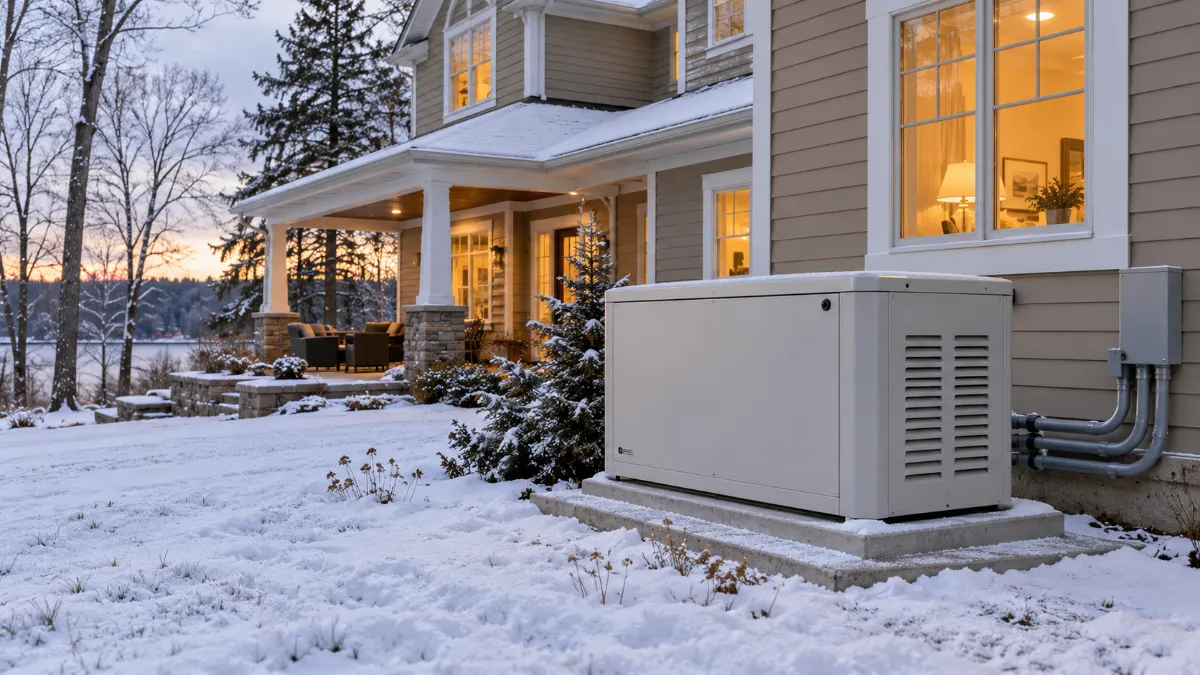
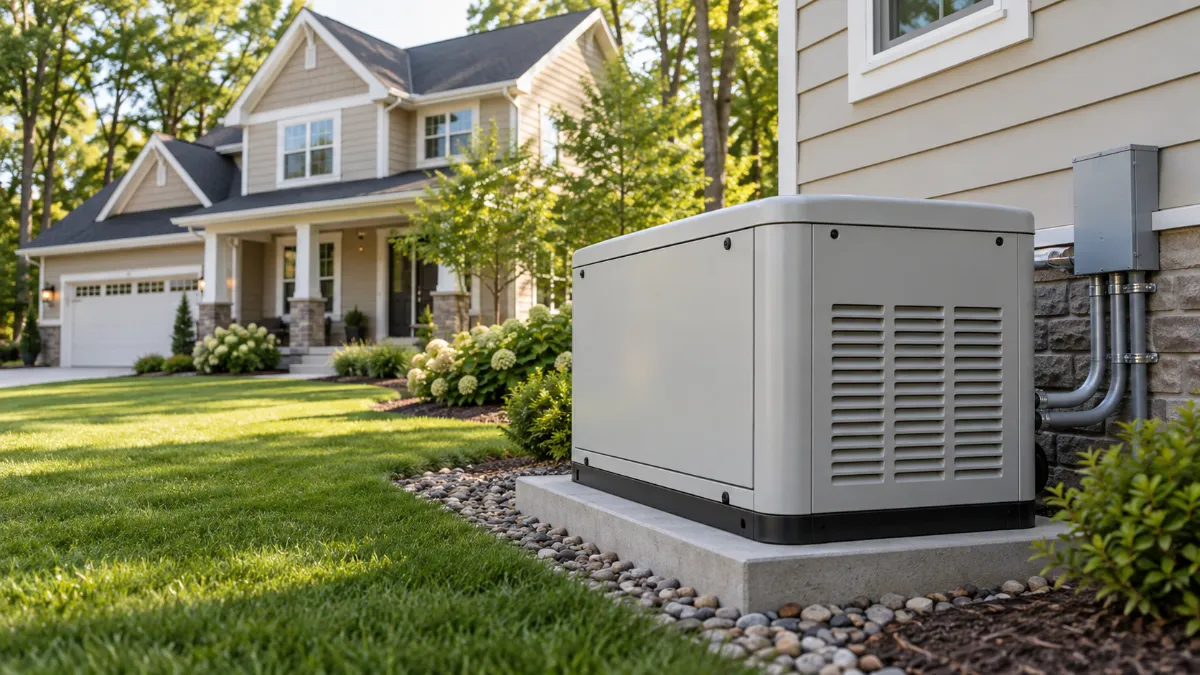
A whole house generator, also called a standby generator, is a permanently installed unit that runs on natural gas or propane and starts on its own when the power fails. It connects to your electrical system through an automatic transfer switch.
Homeowners often ask, “what does a whole house generator cost?” The honest answer: add the unit, the transfer switch, the site work and the fuel connection. Meyers pricing is a free written estimate after we see your property.
What affects the cost of a whole house generator?
Seven things move your whole house generator cost the most. Each one changes how much equipment and labor your job needs.
- Generator size (kW). More kilowatts means a larger unit and a higher equipment cost. Size depends on what you want to power, not on square footage alone.
- Fuel type. Natural gas and propane both work. Gas line upgrades or a new propane tank add work and materials.
- Automatic transfer switch. This device moves your home from utility power to generator power. Its size and number of circuits affect cost.
- Distance from the panel. A longer run between the generator and your electrical panel takes more wire, conduit and labor.
- Concrete pad. The generator sits on a level pad. Soil, slope and frost depth affect the pad work.
- Permits and inspection. Electrical work needs to meet code and pass inspection, which adds a line to the job.
- Gas line or propane tank work. Running a new gas line or setting a tank is its own scope of work.
Whole house generator cost by size
Size is the biggest driver of whole house generator cost. A load calculation decides your size, so treat this table as a guide, not a quote.
| Size range | What it typically covers | National equipment range (Angi) | Cost factor notes |
|---|---|---|---|
| 9–20 kW (“partial”) | Essential circuits: furnace, refrigerator, well pump, sump pump, some lights and outlets | $2,000–$6,300 | Smaller unit and transfer switch. Works when you choose which circuits to back up. |
| 22–48 kW (“whole house”) | Most of a home, including central air or several large loads | $5,000–$18,000 | Larger unit, larger transfer switch, heavier wire. Often needs a bigger gas supply. |
| Above 48 kW | Large homes, shops, farm buildings, multiple heavy loads | No standard national range. Priced per project. | Needs an on-site evaluation. Commercial-scale sizing, switchgear and fuel supply drive the price. |
National averages, not a Meyers quote. Source: Angi.
Not sure where you land? Our guide on what size generator you need walks through the load math. For help choosing between unit types, read what kind of generator you need for your house.
What Wisconsin factors change the price?
Three Wisconsin factors shape whole house generator cost on many local jobs: propane, cold weather and code. Each can add scope that national averages don’t capture.
Propane tank sizing for rural homes. Many homes around Rice Lake, Cumberland and Hayward don’t have natural gas. They run on propane. A larger generator burns more fuel, so tank size and placement matter. Your installer and propane supplier should size the generator, the tank and the gas lines as one system, based on your load and how long you want to run through an outage.
Tank cost adds to the project. This Old House lists national installed averages of $800–$1,200 for a 250-gallon aboveground tank and $1,000–$2,000 for a 500-gallon tank ($1,500–$2,500 underground). Local suppliers often lease tanks with lower upfront costs and monthly fees. These are national averages, not a Meyers quote. Source: This Old House
Cold-weather kits. Wisconsin winters are hard on engines. Cummins offers cold weather kits for its home standby generators. We review whether your site needs one during the evaluation. Cummins home standby generators
Permits under SPS 316. Wisconsin’s electrical code, SPS 316, governs electrical installations in the state, and the NEC (NFPA 70) sets the national standard. A standby generator install includes electrical work and, on gas or propane units, fuel line work. Your local building department issues permits and runs inspections, so rules differ by town and county. Confirm with your municipality before work starts. Electricians in Wisconsin are licensed through Wisconsin DSPS. Ask any installer who pulls the permit and make sure the permit cost is in your written estimate.
How long does a whole house generator last, and what does maintenance cost?
Angi says a whole-house generator can last up to 20 years when it is maintained properly. Annual maintenance checks run about $150–$300 a year in national averages, not a Meyers quote. Skipping service is the fastest way to shorten a generator’s life.
So how long does a whole house generator last in Northwestern Wisconsin? Lifespan depends on service, run hours and weather. Regular oil changes, filter swaps, battery checks and test runs keep the unit ready. A generator that sits unserviced for years may not start when you need it.
Homeowners with a standby generator can ask about the Meyers PowerGuard™ generator maintenance plan when they request an estimate. It covers residential standby generators only.
Is a whole house generator worth it?
A whole house generator is worth it when an outage puts your home, your water or your property at risk. In rural Wisconsin, that happens more often than most owners expect. The whole house generator cost buys automatic power the moment the grid goes down.
Weigh the whole house generator cost against four risks:
- Outage exposure. Ice storms and heavy snow can take down lines for long stretches, especially on long rural power runs.
- Wells and sump pumps. No power means no water from a well and no sump pump. A flooded basement can cost far more than the system.
- Frozen pipes. A furnace that can’t run in January puts your plumbing at risk.
- Lake cabins and second homes. A standby unit protects a property you aren’t there to watch.
If you only need to run a few items for a few hours, a smaller system or a portable unit may be enough. A portable unit must be connected through a proper transfer switch or interlock installed by a licensed electrician.
When should you call a licensed electrician?
Call a licensed electrician before you buy, not after. Generator installation involves your panel, a transfer switch, wiring and a fuel connection. These are licensed electrical jobs. Don’t attempt them yourself.
Never connect a generator to your home without a transfer switch or interlock. Backfeeding sends power onto utility lines and can kill line workers. It can also damage your home’s wiring and start a fire.
If you smell burning, see sparking, or find a downed line, leave the area and call 911 first, then call Meyers at (715) 234-3901.
How do you get an accurate whole house generator price?
You get an accurate whole house generator cost from two steps: a load calculation and a free written estimate. The load calculation shows what your home needs. The estimate shows what it costs to meet that need on your property.
During the evaluation, we look at your panel, your loads, your fuel source and the best spot for the unit. Then you get a written estimate with no pressure. Learn more about our generator installation services in Northwestern Wisconsin.
Financing is available for generator installs. See financing for panel replacements and generator installs for details. To start, use Request Generator Evaluation or call (715) 234-3901.
FAQs
How much does a whole house generator cost?
Angi’s national averages put whole-house units (22–48 kW) at $5,000–$18,000, plus installation of $1,550–$8,500. These are national averages, not a Meyers quote. Your whole house generator cost depends on size, fuel, distance from the panel and site work. Meyers gives a free written estimate after we see your property.
What size generator do I need for my house?
Size depends on the loads you want to power, not square footage alone. Add up your furnace, well pump, sump pump, refrigerator and any central air. A load calculation by a licensed electrician sets the size. Our guide on what size generator you need explains the process.
How long does a whole house generator last?
Angi says a whole-house generator can last up to 20 years with proper maintenance. Service matters more than age. Regular oil and filter changes, battery checks and test runs keep it dependable. Meyers PowerGuard™ is our maintenance plan for residential standby generators.
Is financing available for a generator?
Yes. Financing is available for generator installs at Meyers Electric. It is also available for panel replacements. Ask about current financing options when you request your free estimate. Visit our financing page or call (715) 234-3901 to see how it works for your project.
Does a whole house generator need a permit in Wisconsin?
Plan on one. A standby generator install involves electrical work covered by Wisconsin’s electrical code, SPS 316, and the NEC, plus fuel line work. Your local building department issues permits and inspects, and rules vary by town and county. Confirm with your municipality, and ask your electrician who pulls the permit.
Conclusion
Whole house generator cost comes down to the unit, the installation and your property. National averages give you a starting range, but only a load calculation and a site visit give you your number. Request a generator evaluation from Meyers Electric in Rice Lake, or call (715) 234-3901.