
Motor control systems are a fundamental part of industrial operations, ensuring that motors perform efficiently and safely. These systems are essential for managing the start, stop, speed, and direction of motors, which are integral components in numerous industrial applications.
Table of Contents
Purpose of Motor Control in Industry
From manufacturing plants to large-scale construction sites, motors power essential machinery such as conveyors, pumps, fans, and compressors. Without an efficient motor control system, these operations could face operational inefficiencies, unsafe conditions, and higher maintenance costs.
In industrial environments like those in Hayward, Chetek, and Balsam Lake, motor control systems are indispensable for maintaining a smooth workflow. In short, motor control systems are vital for not only controlling motors but also for ensuring that they operate in a safe, efficient, and cost-effective manner.
Industrial Motor Control Panels
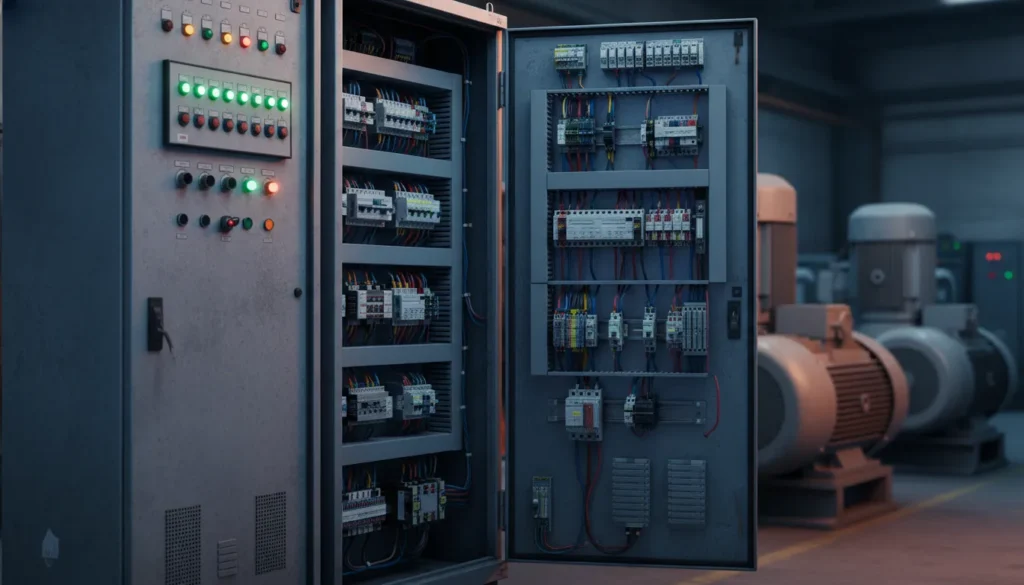
Industrial motor control panels (MCP) are specially designed systems that house the various components responsible for controlling motors in industrial environments. These panels integrate devices such as circuit breakers, contactors, relays, and drives to ensure smooth and efficient motor operation.
In modern applications, MCPs are often enhanced with advanced monitoring features and predictive maintenance techniques, allowing operators to analyse performance data, detect early signs of faults, and reduce unexpected downtime.
These control panels are typically custom-built to meet the specific requirements of different industries, ensuring that all motor functions are not only controlled and monitored but also protected with a high level of precision and safety.
Motor control panels play a crucial role in industrial automation by ensuring smooth operations. These panels are used in a wide range of industries, including food processing, pharmaceuticals, automotive, and material handling.
A well-designed industrial motor control panel doesn’t just focus on motor operation; it integrates safety features, minimizes downtime, and ensures a long operational life of the equipment.
Whether you’re overseeing an industrial facility in North Western Wisconsin or a similar industrial hub, understanding the functionality and purpose of motor control panels is critical.
Motor control panels are also designed to be modular, which means they can be easily adapted to meet the evolving needs of a growing industrial electricians near me.
This adaptability is particularly important in industries that rely on continuous operation, such as water treatment plants and chemical processing facilities.Regular maintenance, as well as periodic upgrades, ensure that the motor control system remains up-to-date and in line with technological advancements.
Industrial Control Panel Components
The components that make up an industrial motor control panel replacement signs are critical for its successful operation. Each part has a specific function that contributes to the overall performance of the motor control system. Here are the essential components of an industrial motor control panel:
- Circuit Breakers: Circuit breakers are essential components that prevent overloads and short circuits by automatically disconnecting the power supply when a fault is detected. Without these, the risk of damage to the motor or electrical fires would increase significantly.
- Contactors: A contactor is an electrical relay used to control the flow of current to the motor. Contactors are typically used in applications where motors need to be turned on and off remotely, as well as for controlling motor circuits in industrial setups.
- Relays: Relays are devices that switch electrical circuits on or off. In a motor control panel, relays are used to trigger actions based on input signals. For example, a relay could be used to trigger a motor to start when a certain condition is met, such as temperature or pressure thresholds.
- Overload Relays: Overload relays protect motors from damage caused by overheating. If a motor draws excessive current, the overload relay will disconnect it from the power source, preventing permanent damage.
- Variable Frequency Drives (VFDs): VFDs control the speed of the motor by adjusting the frequency of the electrical supply. This enables precise motor speed control, which is beneficial for processes requiring variable speeds, such as pumps, conveyors, and fans.
- Push Buttons and Switches: These provide manual control over the system, allowing operators to start, stop, or reset motors.
- Fuses: Fuses act as safety devices in the system by disconnecting the circuit when an overload or fault condition occurs. Unlike circuit breakers, fuses are designed to be replaced after they are blown.
Each of these components plays a significant role in ensuring that industrial motor control panels operate effectively. Without one or more of these components, the entire system’s functionality and safety would be compromised.
What are the Different Types of Motor Control Panels?
Motor control panels come in various types, each designed to address different requirements in industrial applications. Understanding these types is essential for selecting the right system for a specific task. Below are the different types of motor control panels commonly used in the industry:
- Basic Motor Control Panels: These panels are used for simple motor operations. They control basic functions such as turning motors on and off. Basic motor control panels are often found in smaller industrial settings where operations are less complex, and advanced features are unnecessary.
- Remote Motor Control Panels: Remote control panels allow operators to manage motors from a distance. This is particularly useful in large facilities where it may be difficult for operators to be physically close to every motor. With these systems, operators can monitor and control motors remotely, ensuring smooth operations even from a different part of the facility.
- PLC-Based Control Panels: PLCs (Programmable Logic Controllers) have become the standard for controlling industrial processes. PLC-based motor control panels offer enhanced functionality, including the ability to program motor sequences, monitor performance, and integrate with other systems in the facility.
- Explosion-Proof Motor Control Panels: In industries that involve hazardous materials, such as chemicals and petroleum, explosion-proof motor control panels are used to prevent fires or explosions. These panels are built to prevent any electrical sparks or arcs that could ignite volatile gases or chemicals.
- Variable Speed Control Panels: These panels integrate VFDs, allowing precise control over motor speed. This is particularly useful in applications that require variable speeds, such as in HVAC systems or pump stations. These control panels are crucial for industries where adjusting motor speed is necessary to maintain efficiency and reduce energy consumption.
- Motor Starters: Motor starters are an integral part of motor control systems, primarily used to provide protection and control over motor startups. These panels use electromagnetic switches to start and stop motors safely.
The Importance of Motor Control Systems in Industry
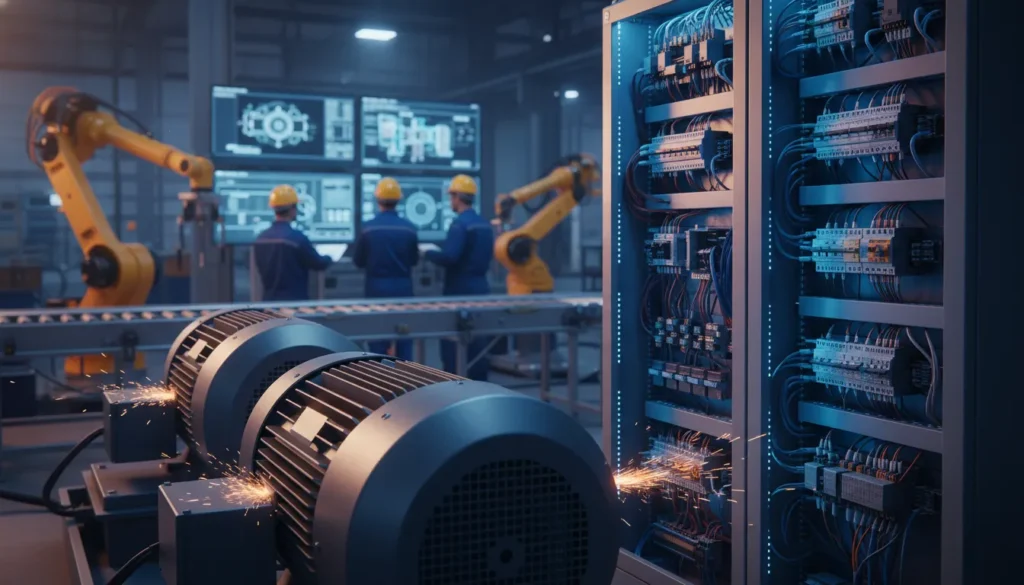
Motor control systems are critical for ensuring the smooth functioning of industrial operations. They allow businesses to operate with precision, optimize energy consumption, and minimize downtime.
A well-maintained motor control system also improves worker safety, which is essential in heavy machinery settings.
In industries like manufacturing, where machines must run 24/7, motor control systems play a critical role in maintaining efficiency and reliability. These systems help maintain continuous power systems by regulating the amount of power supplied to equipment, ensuring smooth and uninterrupted operations.
The proper functioning of motor control systems is directly tied to productivity when a system is functioning at optimal levels, production runs smoothly, and resources are used more efficiently.
Moreover, motor control systems reduce energy costs by minimizing power wastage. By integrating systems like VFDs, industries can adjust motor speeds to match operational requirements, significantly reducing energy consumption and costs.
This, in turn, results in both environmental and economic benefits for companies operating in areas like Rice Lake, Balsam Lake, or Hayward.
FAQs
What factors influence the price of a motor control panel?
The price of a motor control panel is influenced by several factors, including the complexity of the design, the number of components, and the inclusion of advanced features like PLCs or VFDs
How often should motor control panels be maintained?
Motor control panels should be inspected regularly to ensure that all components are working correctly. A maintenance schedule typically involves annual or biannual checks to ensure that circuit breakers, contactors, and other critical components are functioning as they should.
What are the advantages of using a variable speed motor control panel?
Variable speed motor control panels, equipped with VFDs, allow industries to fine-tune motor speed to match operational demands. This helps optimize energy usage, reducing electricity costs, and enhances the overall performance of machinery. It is especially useful in systems requiring frequent speed adjustments, such as HVAC systems and pumps.
How can I save costs when purchasing a motor control panel?
You can save costs by opting for a motor control panel that suits your specific needs without unnecessary features. Working with an experienced industrial electrician can help ensure that your system is cost-efficient, properly designed, and meets all operational requirements.
Conclusion
Motor control systems are essential for running efficient, safe, and reliable operations in industrial settings. From managing motor speeds to ensuring protection from overloads, these systems are critical for businesses aiming to optimize their production processes.
Whether you are in Rice Lake, Chetek, or Clear Lake, investing in quality motor control systems designed to meet your needs will improve productivity, reduce energy costs, and enhance safety. If you are seeking expert help with motor control panels or require a full motor control system installation,
Meyers Electric provides top-notch industrial electrician services across Northwestern Wisconsin. Call us at 715-234-3901 to get a free consultation and ensure your operations run smoothly, efficiently, and safely.