
Power outages do not have to shut everything down. Server farms stay online by combining backup generators, battery systems, redundant power paths, and proactive monitoring.
The same principles can be applied to agricultural operations to protect livestock, equipment, and productivity when power fails.
Table of Contents
How Server Farms Avoid a Power Outage Impact
Server farms operate on a simple rule: downtime is not acceptable. To prevent power downtime, they rely on layered power systems rather than a single source of electricity.
First comes redundancy. Instead of one power feed, there are multiple independent feeds in place. If one fails, another takes over instantly, ensuring continuous operation. Then there are UPS (Uninterruptible Power Supply) systems. These high-capacity batteries activate within milliseconds, bridging the gap and keeping critical systems running without interruption.
Monitoring plays a critical role. Sensors track voltage, temperature, and system load in real time. If anything looks off, automated systems respond before failure occurs.
The takeaway is clear. You do not wait for a power outage. You design your system so failure does not stop operations.
Preparing Your Livestock, Operation for a Power Outage
On a farm, power loss affects more than convenience. It impacts animal health, ventilation, feeding systems, and water supply.
Start with the essentials. Identify what must stay running. Ventilation fans, water pumps, feeding systems, and lighting are often critical. Once identified, these systems should be connected to backup power.
Generators are the backbone here. They must be sized correctly to handle peak load, not just average usage. Many farms underestimate this and end up with overloaded systems during emergencies.
Regular testing is just as important. A generator that fails to start during an outage is worse than not having one at all.
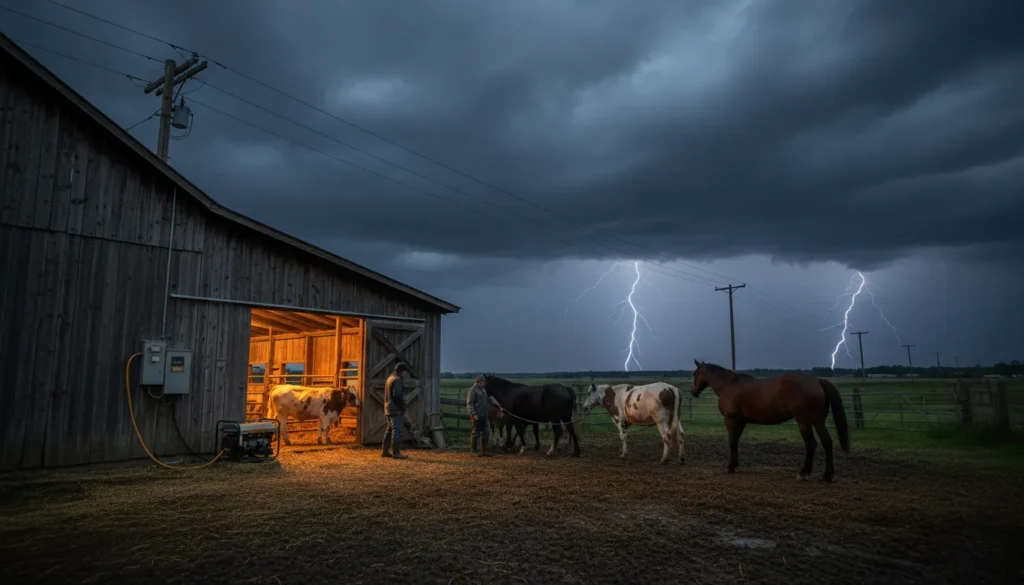
Harm of power outage to chicken houses
Chicken houses are especially vulnerable. Without proper airflow, temperature rises quickly. Within minutes, birds can experience stress. Within hours, losses can become severe.
Ventilation systems must remain active at all times. A power outage here can disrupt air exchange, increase humidity, and create dangerous ammonia levels. This directly affects bird health and growth rates.
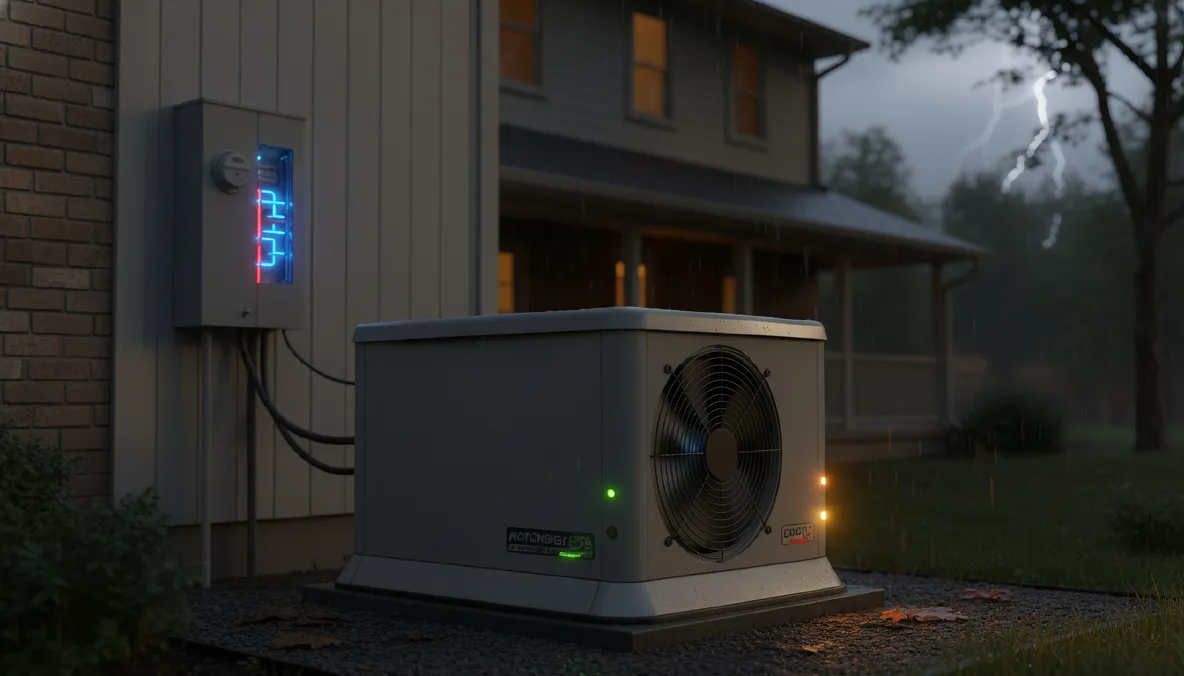
Backup systems should prioritize ventilation first. Automatic transfer switches ensure that when power drops, backup systems activate without delay.
Power outage on your farm
Power outages on farms are not rare. Weather events, grid overload, or equipment failure can interrupt supply without warning.
When that happens, everything slows or stops. Milking systems pause, irrigation halts, and storage systems lose control over temperature.
Farms in areas like Spooner, Hayward, Chetek, and Clear Lake often face seasonal challenges that increase outage risks. Working with North Western Wisconsin Electricians who understand local conditions can make a difference in system design and reliability.
Planning for these disruptions is not optional. It is part of running a stable operation.
Planning for unplanned power outages on the farm
Planning starts with a clear checklist.
Map your electrical system in detail understand where power flows, which components are interconnected, and which systems are truly critical to your operations. This clarity helps you prioritize effectively and reduce risks. Then create a reliable backup plan for each critical system, ensuring there is no single point of failure.
Install automatic transfer switches to enable seamless transitions during outages. These systems remove the need for manual intervention, significantly reducing downtime and operational disruption.
Integrate advanced monitoring tools along with predictive maintenance systems that continuously analyse performance data, detect early warning signs, and alert you before failures occur or when systems switch to backup. This proactive approach not only improves reliability but also extends the lifespan of your electrical infrastructure.
Fuel management is often overlooked. Generators are only as reliable as their fuel supply. Keep reserves and rotate fuel regularly to maintain quality.
Also consider load prioritization. Not everything needs power during an outage. Focus on systems that protect life and prevent loss.
Power Failures: Is Your Operation Ready?
A good question to ask is simple. If power goes out right now, what happens in the next five minutes?
If the answer is uncertainty, there is work to do.
Server Farms Stay Online run simulations to test failure scenarios. Farms can do the same on a smaller scale. Run drills. Shut off power intentionally and observe what happens. Identify weak points and fix them.
Electrical systems should be inspected regularly. Loose connections, outdated panels, and overloaded circuits increase the risk of failure during critical moments.
For those searching for Industrial electricians near me, choosing professionals who understand both industrial systems and agricultural needs is key. Proper installation and maintenance can prevent small issues from turning into major outages.
Power Failure Recovery?
Recovery is just as important as prevention.
Once power is restored, systems should not all restart at once. This can overload circuits and cause secondary failures. A staged restart approach is safer and more efficient.
Check equipment before bringing it back online. Motors, fans, and control systems may have been affected during the outage.
Data tracking can also help. Recording when outages happen and how systems respond provides insights for future improvements.
Having access to reliable industrial electrician services ensures that recovery is handled professionally, reducing downtime and long term damage.
Bridging the Gap Between Server Farms and Agriculture
The connection between Server Farms Stay Online and traditional farms may not seem obvious at first, but the underlying principles are remarkably similar.
Both rely on continuous, uninterrupted operation to function efficiently. Both face significant risks from power disruptions that can lead to costly downtime or loss. To address these challenges, each depends on secure electrical infrastructure designed to maintain stability, ensure reliability, and prevent unexpected failures.
From backup power systems to layered protection strategies, both environments benefit from proactive planning and resilient energy solutions that keep operations running smoothly under all conditions.
Redundancy, monitoring, and proactive maintenance are not exclusive to data centers. They are practical strategies that farms can adopt.
In regions around Rice Lake, where Meyers Electric operates, integrating these systems into farm infrastructure can improve resilience and productivity.

Practical Steps You Can Take Today
Start small but start smart. Install a properly sized generator. Add automatic transfer switches. Test your systems regularly. Monitor your electrical load and upgrade where necessary.
Even simple improvements can reduce the impact of a power outage significantly. Keep emergency contacts ready. Having access to experts at 715 234 3901 can save valuable time during critical situations.
FAQs
How do server farms handle power outages so quickly?
Server farms use UPS systems that activate instantly and generators that take over within seconds. This layered approach ensures no interruption in operation.
What is the most important system to back up on a farm?
Ventilation and water systems are usually the top priority. These directly affect livestock health and must remain operational during any outage.
How often should generators be tested?
Generators should be tested at least once a month. Regular testing ensures they start reliably and perform as expected when needed.
Can small farms benefit from backup power systems?
Yes, even small farms can reduce losses by installing basic backup systems. It is about protecting critical operations, not powering everything.
Why is load calculation important for generators?
Incorrect sizing can lead to overload or inefficiency. Proper load calculation ensures the generator can handle demand during emergencies.
Conclusion
Power outages are unpredictable, but their impact does not have to be. Server farms show what is possible when systems are designed for resilience, using backup power, redundancy, and real time monitoring to keep everything running without interruption.
Farms can apply the same logic to protect livestock, equipment, and operations, ensuring that critical systems like ventilation, water supply, and feeding continue to function even when the main power source fails.
This approach reduces stress on both animals and operators while preventing avoidable losses. By focusing on preparation, smart system design, and reliable support, you turn a potential crisis into a manageable event.
Planning ahead with properly sized generators, automatic transfer systems, and regular testing creates a safety net that activates when it is needed most.
The goal is not just to recover from outages, but to operate through them with confidence, maintaining stability and productivity even during unexpected disruptions.
With the right systems in place, a power failure becomes a temporary inconvenience instead of a serious threat to your operation.