
A generator maintenance checklist for a Wisconsin winter has two parts. You handle quick visual checks: clear snow, scan the control panel and keep the area open. A licensed technician handles the oil, battery, load test, transfer switch and fuel system. Do both before the first hard freeze and your generator is far more likely to start.
Northwestern Wisconsin winters are hard on backup power. Ice storms take down lines, snow buries equipment and cold weakens batteries. Meyers Electric, based in Rice Lake, has served the region since 1986. Here is what you can check yourself and what to leave to a pro.
No generator yet? See our generator installation services in Northwestern Wisconsin.
Table of Contents
Why does generator maintenance matter before a Wisconsin winter?
A standby generator sits idle most of the year, then has to start on the coldest night of the season. Cold thickens oil, weakens batteries and buries units in snow. Maintenance before winter catches problems while the weather is mild, so the generator works when your furnace and well pump need it.
A standby generator is a permanent backup power system that starts automatically when utility power fails and feeds your home through a transfer switch. Nobody is standing next to it when it has to work, so it needs regular attention.
Rural homes feel outages hardest. A well pump, sump pump or propane furnace blower stops when the power does. Many start-up problems come from simple things like a weak battery, old oil or a blocked vent.
Generator maintenance checklist: what you check vs. what a technician does
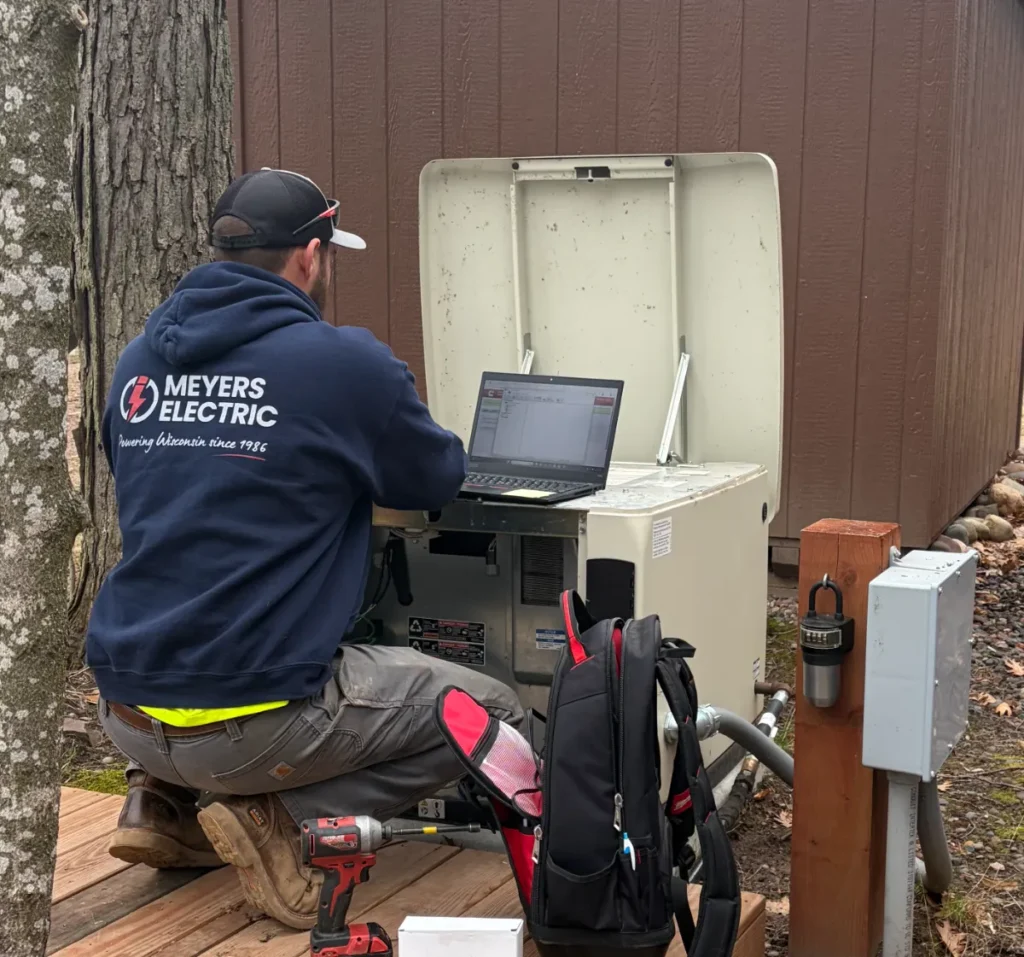
Split your generator maintenance checklist in two. You do visual checks only: look over the unit, clear snow and debris, read the control panel and keep the area open. A technician does everything that means opening the generator. Automatic startup makes reaching into the enclosure dangerous.
What you can safely check (visual only)
- Look the unit over from the outside. Watch for rust, cracks, loose panels or fluid on the pad. Do not open the enclosure.
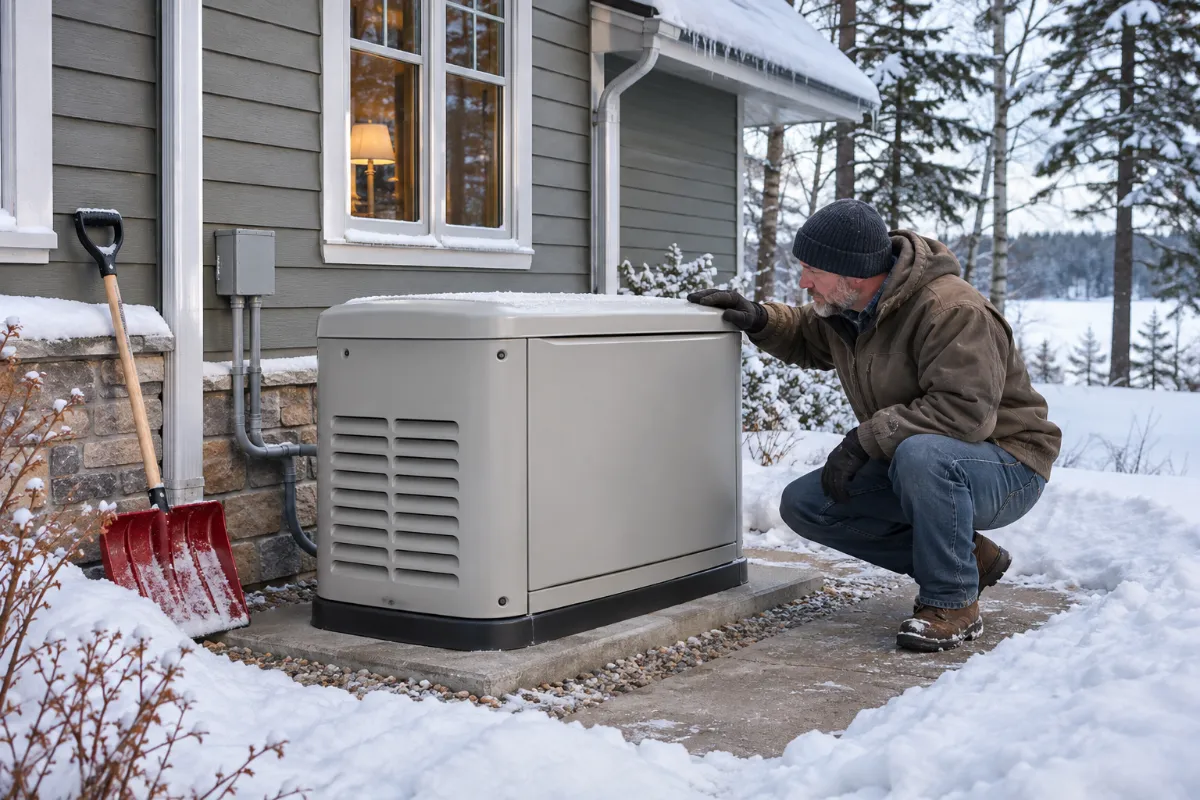
- Clear snow, ice and debris around the unit. Keep hands and tools out of the vents and housing.
- Check the control panel. Read the display or monitoring app, if your unit has one, for warning lights or fault messages.
- Confirm the unit shows it is ready to start. If the panel shows anything other than automatic or ready, call a technician.
- Keep the area clear. Move firewood, equipment and shrubs away so air can flow and a technician can reach the unit.
- Keep a log. Write down each check, alert and service visit. Cummins recommends keeping run hours and service records in one place.
What a technician does
- Oil and filter service. Fresh oil and a clean filter protect the engine in cold starts.
- Battery test. The technician tests the battery and its connections.
- Load test. The generator runs under a real load to confirm it delivers the power your home needs.
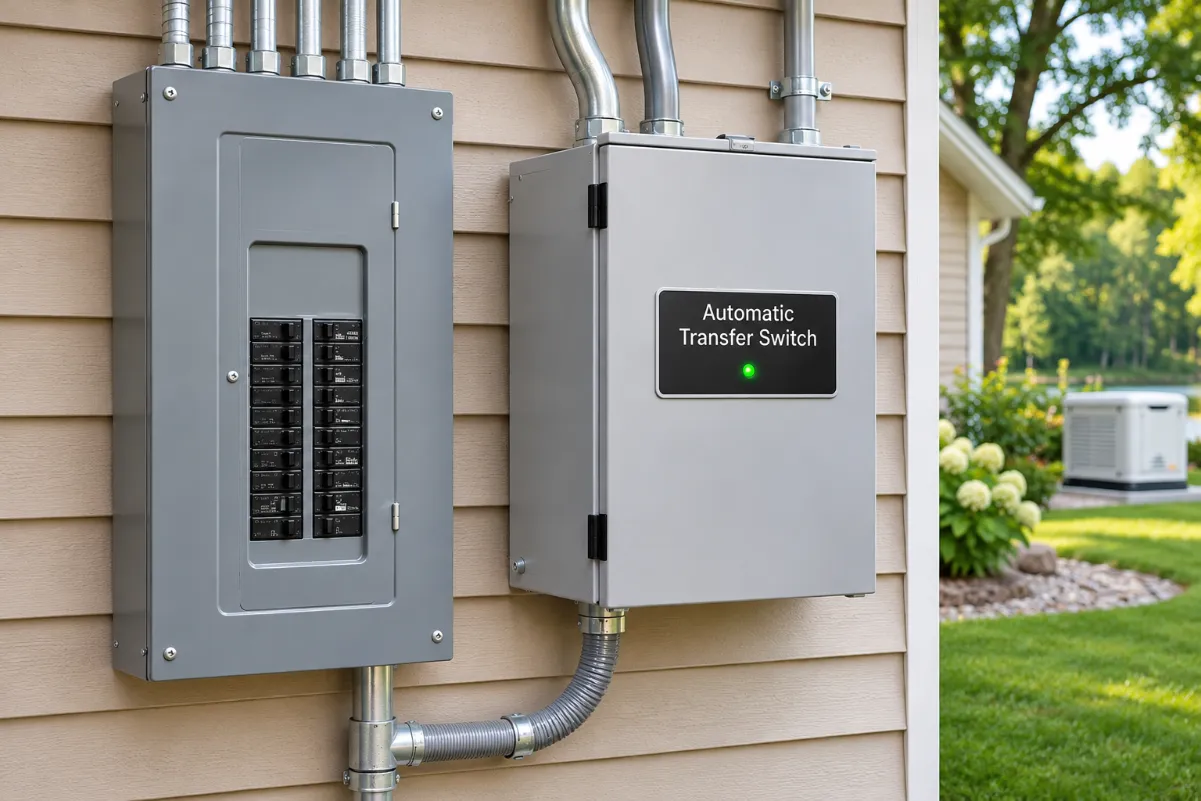
- Transfer switch test. This confirms the switch moves your home between utility and generator power.
- Fuel system check. The technician checks your natural gas or propane supply and connections.
- Controller and fault review. The technician reviews fault history and updates the service record.
Every item here involves live electrical parts, fuel or an engine that can start on its own.
How often should a generator be serviced?
Follow the schedule in your operator’s manual. As a baseline, plan on professional service at least once a year, ideally in early fall before the first hard freeze. Cummins says to service a unit more often in extreme temperatures, and Wisconsin winters count.
Cummins maintenance tips point owners to the periodic maintenance schedule in the operator’s manual, which is the final word for your model. Here is how your generator maintenance checklist breaks down across the year:
| When | Who | What |
|---|---|---|
| On the unit’s set schedule | The generator | Automatic exercise cycle |
| Monthly, and after heavy snow | You | Visual checks and snow clearance from the checklist above |
| After any outage | You | Check the panel for alerts, update your log |
| At least once a year | Licensed technician | Full service and testing from the technician list |
How often should I run my generator?
A home standby generator runs its own exercise cycle automatically, typically on a weekly schedule. You do not need to start it by hand. Your job is to confirm the cycles are happening and the control panel shows no alerts.
An exercise cycle confirms the engine starts and runs. It does not replace a technician’s load test or transfer switch test.
For context, NFPA 110 sets testing expectations for emergency power systems in hospitals and other critical facilities. Your home unit follows the manufacturer’s schedule instead.
How to winterize a generator in Wisconsin
To winterize a generator, treat it as seasonal preparation, not a shutdown. It is one more part of your generator maintenance checklist. Have a technician service it and test the battery, add a cold-weather kit if your model calls for one, and keep snow cleared and fuel supplied. Leave the unit in automatic so it can start during an outage.
- Cold-weather kits. Depending on your model, a technician may recommend accessories such as a battery warmer or engine heater.
- Battery health. Cold weakens batteries. Ask the technician to test yours during your fall visit.
- Snow clearance. Clear drifts and ice after each storm. Never let snow block the vents or exhaust path.
- Propane level. On propane, check the tank gauge through winter and refill before it runs low. A long outage can use more fuel than you expect.
- Carbon monoxide alarms. Generator exhaust contains carbon monoxide. FEMA recommends carbon monoxide detectors in your home during any outage.
What are the signs your generator needs service now?
Warning lights, a unit that will not start, surging power, loss of output and leaks all mean it is time to call. Do not wait for the next storm. Note what the panel shows, then call a licensed technician.
| Sign | What to do |
|---|---|
| Warning light or fault message on the panel | Write down the message and call us |
| Unit will not start or fails its exercise run | Call us. Do not keep trying to start it |
| Surging or rough running | Read why is my generator causing power surges, then call us |
| Weak or no output while running | Read what causes a generator stator failure, then call us |
| Oil or fluid puddled under the unit | Keep clear of the unit and call us |
If you see smoke or sparking, smell burning or smell gas, leave the area and call 911 first, then call Meyers at (715) 234-3901.
When to call a licensed electrician: the Meyers PowerGuard™ plan for home generators
Call a licensed electrician when any item on your generator maintenance checklist turns up an alert, a leak, a failed exercise run or a unit that will not start. Never open the generator, wire it or connect it to your home yourself. Meyers Electric is Cummins-certified and serves Northwestern Wisconsin.
Never plug a generator into a wall outlet or wire it into your panel without a transfer switch or interlock. It backfeeds the power lines and can kill utility workers.
Want the work handled for you? The Meyers PowerGuard™ generator maintenance plan is our plan for residential standby generators, and it takes the guesswork out of standby generator maintenance. PowerGuard™ is for homes only. Call us to learn what it covers for your unit.
Learn More About Meyers PowerGuard™ or Call Us Now: (715) 234-3901
Frequently asked questions
How often should a generator be serviced?
Follow your operator’s manual. As a baseline, schedule professional service at least once a year, ideally in early fall before freezing weather. Service it more often in extreme temperatures, as Cummins advises. Between visits, check the panel for alerts after every outage.
How often should I run my generator?
A home standby generator runs its own exercise cycle automatically, typically weekly. You do not need to start it yourself. Check the control panel to confirm the cycles are happening and no alerts are showing. If the unit skips a cycle or shows a fault, call a technician.
What does generator maintenance include?
Owners handle visual checks: looking the unit over, clearing snow, reading the control panel and keeping a log. A technician handles oil and filter service, battery testing, a load test, a transfer switch test and a fuel system check. Together they make up a full generator maintenance checklist.
Do I need to winterize a standby generator?
Yes, but it is seasonal preparation, not a shutdown. Have a technician service the unit and test the battery, keep snow cleared, and keep your propane level up. Ask whether your model needs a cold-weather kit. Leave the generator in automatic so it can start during an outage.
Is there a maintenance plan for home generators?
Yes. The Meyers PowerGuard™ plan is our maintenance plan for residential standby generators. It is available for homes only, not for businesses or farms. Call Meyers Electric at (715) 234-3901 to learn what the plan covers for your generator and how to sign up.
Keep your generator ready all winter
Use this generator maintenance checklist monthly, clear the snow after every storm and book professional service before the first hard freeze. Meyers Electric in Rice Lake helps Northwestern Wisconsin homeowners keep backup power ready.