
How to prepare for a power outage comes down to three steps: pack an emergency kit, write a plan for heat, water and communication, and set up backup power for the circuits you can’t live without. Do all three before the first ice storm, not during it.
Ice on lines, heavy snow and long rural power runs make winter outages a real risk for homes, farms and lake cabins. Meyers Electric, based in Rice Lake and serving Northwestern Wisconsin since 1986, built this checklist so you know what to stock, what to do and what never to do.
Table of Contents
How to prepare for a power outage: the short answer
To prepare for a power outage, do three things: pack a kit with water, food, light and medications; write a plan for heat, communication and checking on neighbors; and arrange backup power. In a Wisconsin winter, heat and carbon monoxide safety come first.
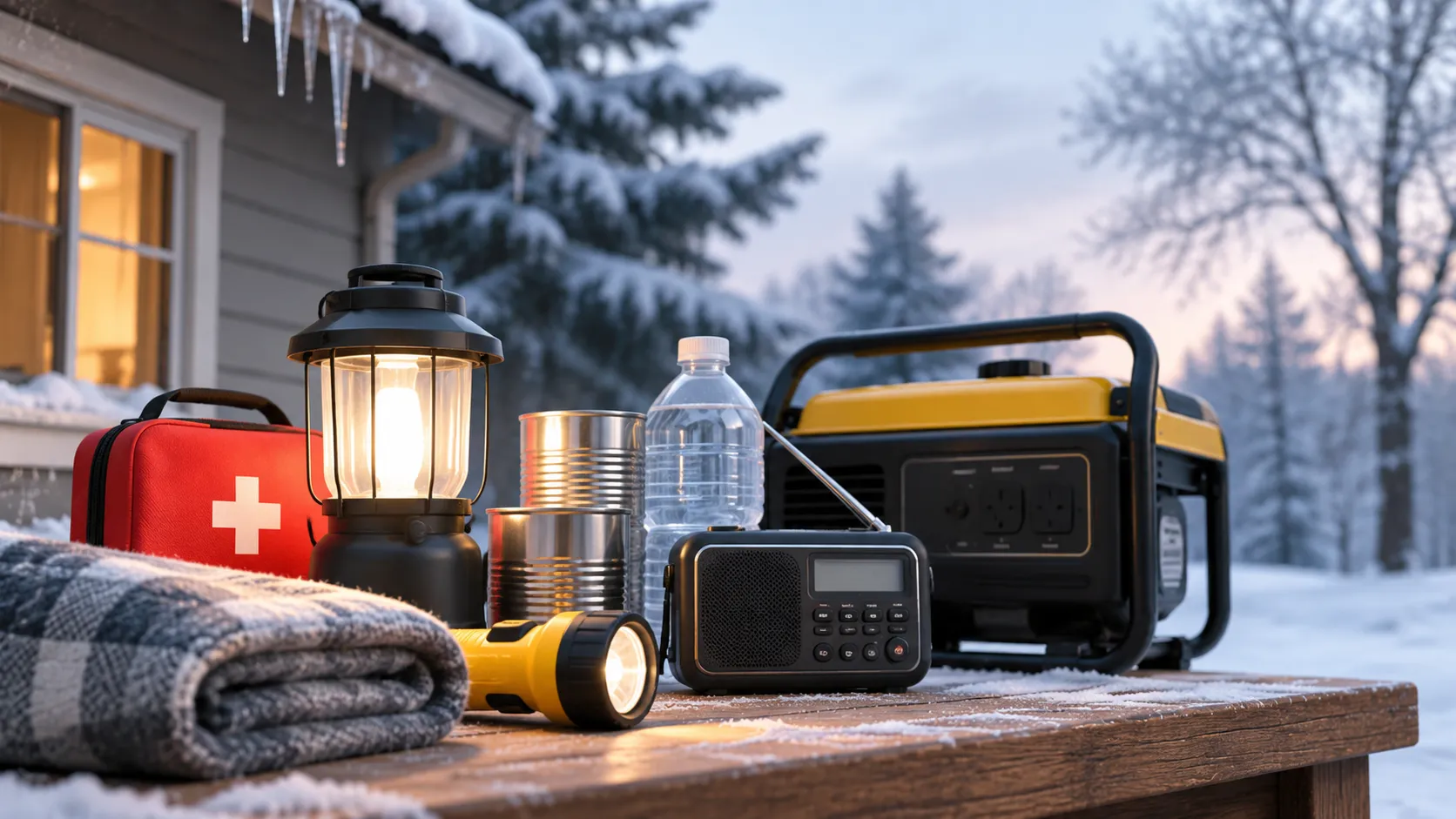
- Kit: Stock the items in the checklist below and keep them in one spot you can find in the dark.
- Plan: Pick one room to stay in, decide how you will charge phones, and know who needs a check-in, such as older neighbors.
- Backup power: Choose a portable generator on a transfer switch or a standby generator. The last sections compare them.
Power outage checklist: what should you have on hand?
A good power outage checklist covers water, food that needs no cooking, light, batteries, medications, phone power and a carbon monoxide detector with battery backup. To prepare for a power outage in winter, stock enough to stay home for several days.
| Item | What to have | Why it matters |
|---|---|---|
| Water | One gallon per person per day, for at least three days | Homes on a private well lose water when the pump loses power |
| Food | Canned and dry food, plus a manual can opener | No cooking or refrigeration needed |
| Light and batteries | A flashlight or headlamp per person, plus spare batteries | Safer than candles, which add fire risk |
| Medications | A supply on hand; ask your doctor about refrigerated medicine and powered medical devices | Ready.gov advises planning for both |
| Phone power | Charged power banks, a car charger and a battery or crank radio | Keeps you reachable and informed |
| CO detector | A detector with battery backup on every floor | Protects you if anyone runs a generator |
| Warmth | Blankets, sleeping bags, hats, wool socks | Heat is the main winter risk |
How do you prepare your home’s electrical system for an outage?
Prepare your electrical system with whole-house surge protection, a plan for your sump and well pumps, and a known location for your main panel. These steps limit damage when power drops and returns, and they make adding backup power simpler later.
Surge protection. A whole-house surge protector is a device installed at your panel that helps shield your wiring and appliances from voltage spikes. Spikes can hit when power returns after an outage. Read more about whole house surge protection and how it works.
Sump and well pumps. A sump pump keeps your basement dry and a well pump supplies your water, and both stop when the power does. Ask a licensed electrician whether battery backup or a generator circuit fits each pump. The right setup depends on your pump and your property.
Your panel. Know where your electrical panel is and keep a flashlight nearby. Do not open the panel or work inside it. That is a job for a licensed electrician.
How to stay warm during a power outage in a Wisconsin winter
To stay warm during a power outage, stay in one room, close the doors, layer clothing, use blankets and sleeping bags, and keep eating and drinking. Never use a grill, oven, camp stove or generator indoors to make heat. They release carbon monoxide.
- Shrink the space. Gather everyone in one interior room and close doors to the rest of the house.
- Layer up. Wear hats, socks and several thin layers. Add blankets and sleeping bags at night.
- Fuel your body. Eat regular meals and drink fluids.
- Know your exit. If the house keeps getting colder, go to a friend, a relative or a warming shelter instead of toughing it out.
Carbon monoxide is the biggest winter outage danger. Carbon monoxide is an odorless, colorless gas produced by burning fuel. Headache, dizziness and weakness are warning signs. If your detector sounds or anyone feels these symptoms, get outside into fresh air and call 911. The CPSC says generators belong outdoors only.
What to do during a power outage
When the power goes out, check whether neighbors are also dark, report the outage to your utility, unplug sensitive electronics, keep the refrigerator and freezer closed, and use flashlights instead of candles. If only your home is dark, call a licensed electrician.
- Check the area. If neighbors have power and you don’t, the problem is likely at your home. Call a licensed electrician.
- Report it. Contact your electric utility or co-op, and check its outage map for updates.
- Unplug electronics. Disconnect computers, TVs and appliances to protect them from a surge when power returns.
- Keep the fridge shut. Ready.gov says a closed refrigerator keeps food cold for about 4 hours and a full freezer for about 48 hours.
- Stay off downed lines. If you see downed lines, sparks, smoke or smell burning: leave the area and call 911 first, then call Meyers at (715) 234-3901.
- Follow generator safety. Run a portable generator outside only, never in a garage, and never plug it into a wall outlet. Connecting a generator to your house without a transfer switch or interlock can send power back onto the utility line and kill line workers. This is called backfeeding.
How long does a power outage last?
How long a power outage lasts depends on the cause, the damage and how many customers are affected. Your utility’s outage map gives the best estimate for your area. The U.S. Energy Information Administration (EIA) measures reliability as total outage time per customer across a full year, not the length of a single outage. In 2022, the average U.S. customer had about 5.5 hours of interruptions, and the EIA reports the yearly average has stayed near two hours when major events are excluded. Major events such as winter storms drive the long outages. See the EIA analysis.
| Cause | What affects restoration time |
|---|---|
| Ice storm or heavy snow | Crews must clear trees and repair broken lines before restoring power |
| Rural line damage | Long distances mean more miles for crews to inspect |
Plan your kit for a multi-day outage.
Backup power options: portable generator with a transfer switch vs. whole-house standby
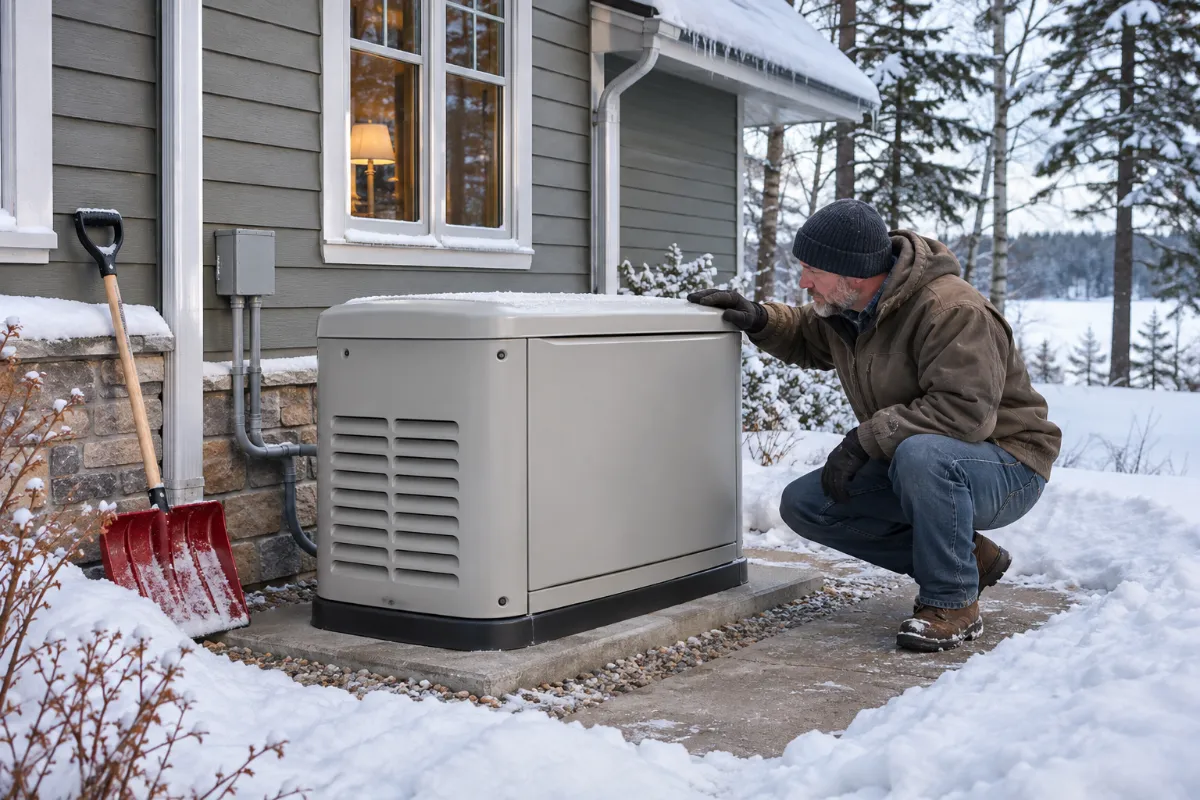
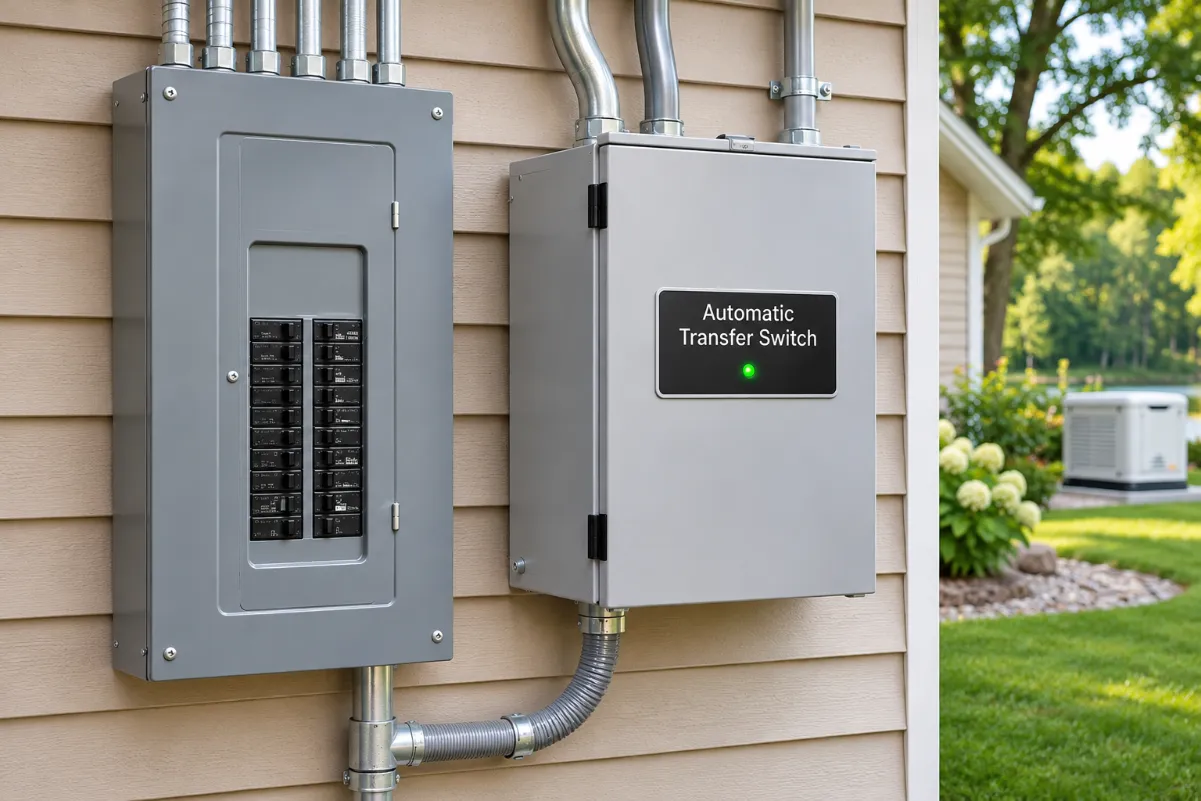
You have two main backup power options. A portable generator on a transfer switch powers selected circuits when you start it. A standby generator is a permanent unit that starts on its own and can power most or all of your home. Both need a licensed electrician.
A transfer switch is a device that safely moves your home’s power from the utility to a generator and keeps the two from connecting. It protects line workers and your generator.
| Portable generator + transfer switch | Whole-house standby generator | |
|---|---|---|
| Startup | You start it and fuel it by hand | Starts automatically when power fails |
| Fuel | Stored fuel you refill | Permanent fuel supply, such as natural gas or propane |
| What it powers | Circuits you choose | Selected circuits or most of the home, based on sizing |
| Where it runs | Outdoors only, away from the house | Outdoors on a pad, installed to code |
| Best for | Basic needs on a tighter setup | Homes, farms and cabins that can’t go cold or dry |
Meyers Electric is Cummins-certified, so we install Cummins generators, including QuietConnect standby units and Onan portables. Not sure where a portable unit should sit? See how far a generator should be from your house. To size and plan a system, start with our generator installation services in Northwestern Wisconsin.
Ready to plan backup power? Request Generator Evaluation or call (715) 234-3901.
When should you call a licensed electrician?
Call a licensed electrician if you want a generator or transfer switch installed, need backup for a sump or well pump, want surge protection, or lose power at only your home. Do not attempt generator hookups or panel work yourself.
Our residential electricians in Rice Lake handle all of this across Northwestern Wisconsin, and 24/7 emergency electrical service is available. The best time to call is before the next storm. Hours are Monday–Friday, 7:00AM–4:30PM Central. Call Us Now at (715) 234-3901.
FAQs
How do I prepare for a power outage in winter?
Build a kit with water, no-cook food, flashlights, batteries, medications and a battery-backup carbon monoxide detector. Add blankets and sleeping bags, choose one room to stay in, and plan how to charge phones. Then arrange safe backup power, such as a generator installed with a transfer switch by a licensed electrician.
What should I do first when the power goes out?
Check whether your neighbors are also without power. Then report the outage to your utility, switch to flashlights and unplug sensitive electronics. Keep the refrigerator and freezer doors closed. If you see downed lines, sparks or smoke, leave the area and call 911 first, then call Meyers at (715) 234-3901.
How do I keep my house warm without power?
Stay in one interior room, close the doors, and layer clothing and blankets. Block drafts under doors and keep curtains closed at night. Never use a grill, oven, camp stove or generator indoors for heat, because they produce carbon monoxide. If your home stays cold, go to a friend or a warming shelter.
Is it safe to run a generator in the garage?
No. Never run a generator in a garage, basement or shed, even with the door open. Generators produce carbon monoxide, which can reach deadly levels quickly and drift into your home. Run portable units outdoors only, well away from windows, doors and vents, and keep a battery-backup carbon monoxide detector on every floor.
Do I need a generator for my well pump?
If your home uses an electric well pump, you lose running water when the power fails. A generator on a properly installed transfer switch can keep the pump running. A licensed electrician must size the generator for your pump’s startup load. Storing water is a good backup either way.
Conclusion
Knowing how to prepare for a power outage means having a kit, a heat plan and safe backup power in place before winter storms hit. Meyers Electric helps homeowners across Rice Lake and Northwestern Wisconsin choose and install the right system. Request Generator Evaluation or call (715) 234-3901.