
Dim or dead parking lot lights usually trace back to aging fixtures, voltage drops, failing drivers, damaged wiring, or neglected maintenance, and they directly impact safety, liability, and business perception.
Table of Contents
Parking Lot Lighting Issues
If your lot looks uneven, shadowed, or completely dark in sections, the problem is rarely cosmetic. It is electrical, structural, and operational. Commercial parking lots especially rely on effective lighting for safety, security, and aesthetics.
Across Rice Lake and nearby communities like Siren, Webster, Cameron, and Minong, exterior lighting systems work hard through long winters, temperature swings, and moisture exposure.
Property owners often notice the issue only after customers mention it or after an incident occurs. By then, the risk has already increased.
Upgrading to LED parking lot lighting offers benefits such as improved efficiency, significant cost savings, and better illumination quality compared to older lighting technologies.
Why Parking Lot Lighting Fails
Exterior lighting systems are exposed to conditions that indoor fixtures never experience. Snow buildup, ice, wind, heat expansion, and water infiltration gradually weaken components.
The most common causes include:
1. Aging Fixtures
Metal halide and high pressure sodium lamps lose brightness long before they burn out. Lumens measure the brightness of a light source, and a higher lumens value means a brighter light.
As the light source ages, its lumens output decreases, leading to reduced brightness and uneven coverage. Even if the fixture still turns on, output may drop by 30 to 50 percent over time. That reduction creates shadows and uneven coverage.
2. LED Driver Failure
Modern LED fixtures rely on drivers to regulate power. When a driver weakens, lights flicker, dim, or shut off entirely. Inconsistent voltage also shortens lifespan.
3. Wiring and Connection Issues
Corrosion inside pole bases, loose wire nuts, and underground conduit damage are common in Wisconsin climates. Moisture intrusion accelerates deterioration.
4. Photocell or Timer Malfunctions
If lights do not turn on at dusk or remain on during daylight, control components are often the issue rather than the fixture itself.
5. Panel and Circuit Overload
Exterior lighting circuits connected to overloaded panels may trip repeatedly, causing sections of the lot to go dark.
When these issues are ignored, performance declines gradually until customers notice unsafe conditions.
The Real Cost of Poor Lighting
Dim lighting is not just inconvenient. It affects:
- Customer confidence
- Employee safety
- Slip and fall risk
- Security camera visibility
- Insurance exposure
- Brand perception
Effective parking lot lighting solutions play a critical role in enhancing safety and security by significantly improving visibility for both pedestrians and drivers.
Poor illumination often leads to commercial lighting performance issues, such as uneven brightness, dark spots, and reduced efficiency, which can increase the risk of accidents and criminal activity.
Proper lighting also reduces collisions, with facilities showing a 25% reduction in vehicle collisions. Effective lighting increases business patronage during nighttime hours, as a bright, well-lit environment makes employees and customers feel safer.
Recommended lighting levels for parking lots are typically between 0.5 to 5 foot-candles. According to the National Safety Council, more than 50,000 crashes and 60,000 injuries occur in parking facilities annually.
Dimly lit areas serve as hotspots for criminal behavior, making crime more likely. In smaller communities like Siren or Minong, reputation spreads quickly. A poorly lit parking lot can influence whether customers return.
For larger commercial properties in Cameron or Webster, lighting inconsistencies can create compliance concerns and liability exposure. From a business standpoint, lighting is not an expense. It is risk management.

Signs Your System Needs Immediate Attention
Property owners often overlook early warning signals. Watch for:
- Uneven brightness across poles
- Flickering or cycling lights
- Yellow or pink colour shift in older lamps
- Buzzing sounds from fixtures
- Repeated breaker trips
- Dark corners or shadows between poles
If multiple poles fail within a short period, the issue may be systemic rather than isolated.
A professional evaluation from experienced Commercial Lighting specialists ensures you are solving the root cause rather than replacing individual bulbs without addressing infrastructure problems.
Importance of Light Distribution
Light distribution is a critical factor when selecting LED parking lot lights for any commercial parking lot. Proper light distribution ensures that every area of the lot receives even and adequate illumination, minimizing dark spots and reducing glare.
This not only enhances the overall safety and security of the property but also improves pedestrian safety and visibility for both employees and visitors.
When a parking lot is well-lit, it becomes easier for people to navigate walkways and driveways, reducing the risk of accidents and making the space more inviting.
LED Upgrades vs Repairs
One of the most common questions property managers ask is whether to repair existing fixtures or upgrade entirely.
This decision often goes beyond just lighting performance and cost it also involves long-term efficiency, safety, and how well the system fits into broader security and electrical systems integration strategies across the property.
When considering an LED retrofit, it’s important to note that upgraded LED parking lot lights provide abundant lighting, are cost-effective over time, and often feature options like dusk-to-dawn photocells and motion sensors to maximize energy efficiency.
The type of LED parking lot lighting you choose should be based on the size of the space and your style preference. LED parking lot lights are energy efficient, require less maintenance than traditional lighting, and can help reduce operating and maintenance costs for parking lot owners.
Additionally, LED parking lot lighting can improve safety and visibility in commercial exteriors and can deter crime by providing bright and even illumination.
Repair Makes Sense When:
- Fixtures are structurally sound
- Failures are isolated
- Wiring remains intact
- Budget constraints require phased improvements
Upgrade Makes Sense When:
- Fixtures are over 10 years old
- Energy costs are high
- Maintenance calls are frequent
- Light distribution is uneven
- Compliance standards have changed
LED retrofits provide improved lumen output, lower energy usage, and better visibility uniformity. They also reduce long term maintenance costs.
For businesses across North-western Wisconsin electricians often recommend lifecycle cost comparisons rather than upfront price decisions.
Electrical Infrastructure Matters More Than Fixtures
Many property owners focus on the visible fixture. The real issue is often behind the scenes.
Parking lot systems rely on:
- Proper panel capacity
- Correct voltage levels
- Intact underground conduit
- Secure pole base connections
- Functional contactors and photocells
If any part of the chain weakens, performance drops.
In Rice Lake and surrounding areas, freezing and thaw cycles shift soil. That movement stresses underground conduit and wiring connections. Over time, small shifts lead to insulation damage or moisture infiltration.
This is why temporary fixes rarely solve recurring failures.
Safety and Liability Considerations
Insurance carriers evaluate site conditions when assessing claims. Inadequate lighting can be interpreted as negligence if incidents occur.
Poor illumination affects:
- Pedestrian visibility
- Vehicle navigation
- Snow and ice hazard detection
- Security deterrence
For retail centres, healthcare facilities, schools, and industrial sites, lighting is part of a broader safety framework.
If a property in Webster or Cameron experiences repeat outages without documented corrective action, legal exposure increases.
Routine inspections reduce that risk significantly.
Energy Efficiency and Cost Control
Energy consumption is another overlooked factor. Older lighting systems consume significantly more electricity than modern LED installations.
Replacing outdated fixtures can:
- Reduce monthly utility costs
- Improve light consistency
- Lower maintenance frequency
- Enhance night-time appearance
LED lighting is the top choice for organizations to ensure the well-being of workers and deter crime.
In many cases, the return on investment becomes clear within a few years. Combined with reduced service calls, the financial case strengthens further.
Maintenance Planning vs Emergency Response
Reactive maintenance costs more than preventive planning.
A structured lighting maintenance plan includes:
- Annual electrical inspections
- Photocell testing
- Pole base inspections
- Fixture cleaning
- Voltage verification
- Circuit load evaluation
Instead of waiting for complete failure, proactive assessments identify weak components before outage occurs.
Across communities like Siren and Minong, businesses that schedule routine checks experience fewer emergency calls and lower annual costs.
When to Call a Professional
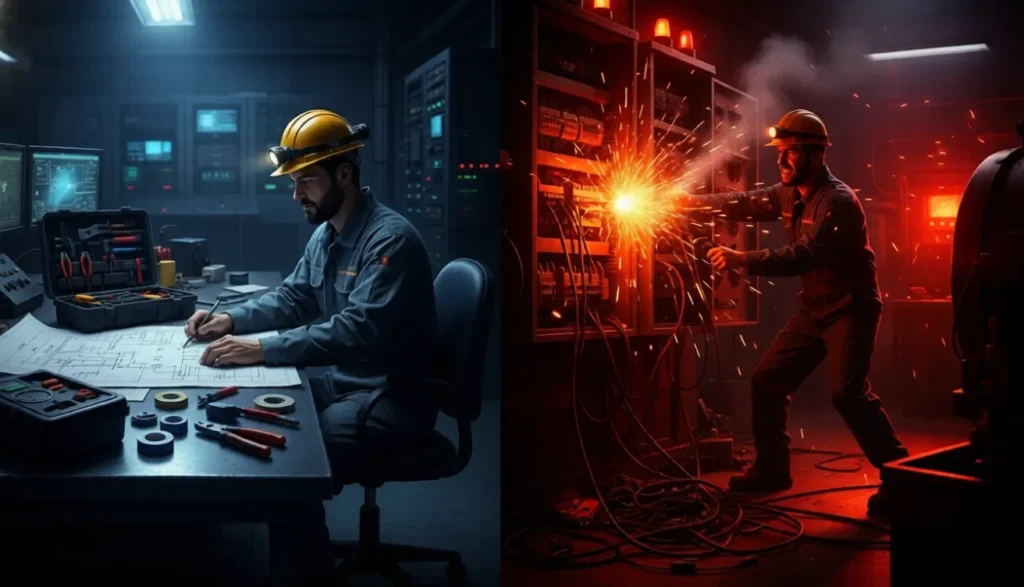
If your parking lot lighting shows recurring issues, widespread dimming, or inconsistent activation, it is time for licensed evaluation to fix outdoor lighting issues.
An experienced contractor will:
- Measure voltage at multiple points
- Inspect panel capacity
- Evaluate underground conduit integrity
- Test drivers and controls
- Assess structural stability of poles
Local expertise matters because soil conditions, climate exposure, and infrastructure age vary across North-western Wisconsin electricians understand those regional challenges.
For businesses in Rice Lake and surrounding areas, Meyers Electric has handled complex exterior system troubleshooting where surface level repairs failed to resolve deeper electrical faults.
If you need professional assistance, contact 715-234-3901 for an evaluation.
FAQ’s
Why do my parking lot lights flicker before going out?
Flickering often signals voltage irregularities, failing drivers, or loose internal connections. Addressing it early prevents full fixture failure.
Is it better to replace one pole or upgrade the entire system?
It depends on system age and infrastructure conditions. A full assessment helps determine whether isolated repair or strategic upgrade makes more financial sense.
How often should parking lot lighting be inspected?
At least once annually, with additional checks after severe weather events. Routine inspection prevents sudden outages and liability exposure.
Can cold weather cause lights to stop working?
Yes, extreme cold affects drivers, wiring insulation, and control components. However, persistent issues usually indicate underlying electrical problems.
Do LED fixtures require less maintenance?
They generally require fewer lamp replacements and consume less energy, but drivers and controls still require periodic inspection.
Conclusion
Dim or dead parking lot lighting is not just an inconvenience. It signals electrical stress, aging infrastructure, or neglected maintenance. Left unresolved, it increases safety risks, operational costs, and liability exposure.
Whether your property sits in Rice Lake, Siren, Webster, Cameron, or Minong, consistent exterior illumination protects both people and reputation. Evaluating the entire system rather than replacing isolated components ensures long term reliability.
Proactive inspection, strategic upgrades, and proper electrical diagnostics keep your property visible, safe, and professionally maintained year round.
Follow expert guidance and best practices for parking lot lighting to maximize safety and efficiency. Learn more about parking lot lighting solutions and access additional resources to stay informed and make the best decisions for your property.