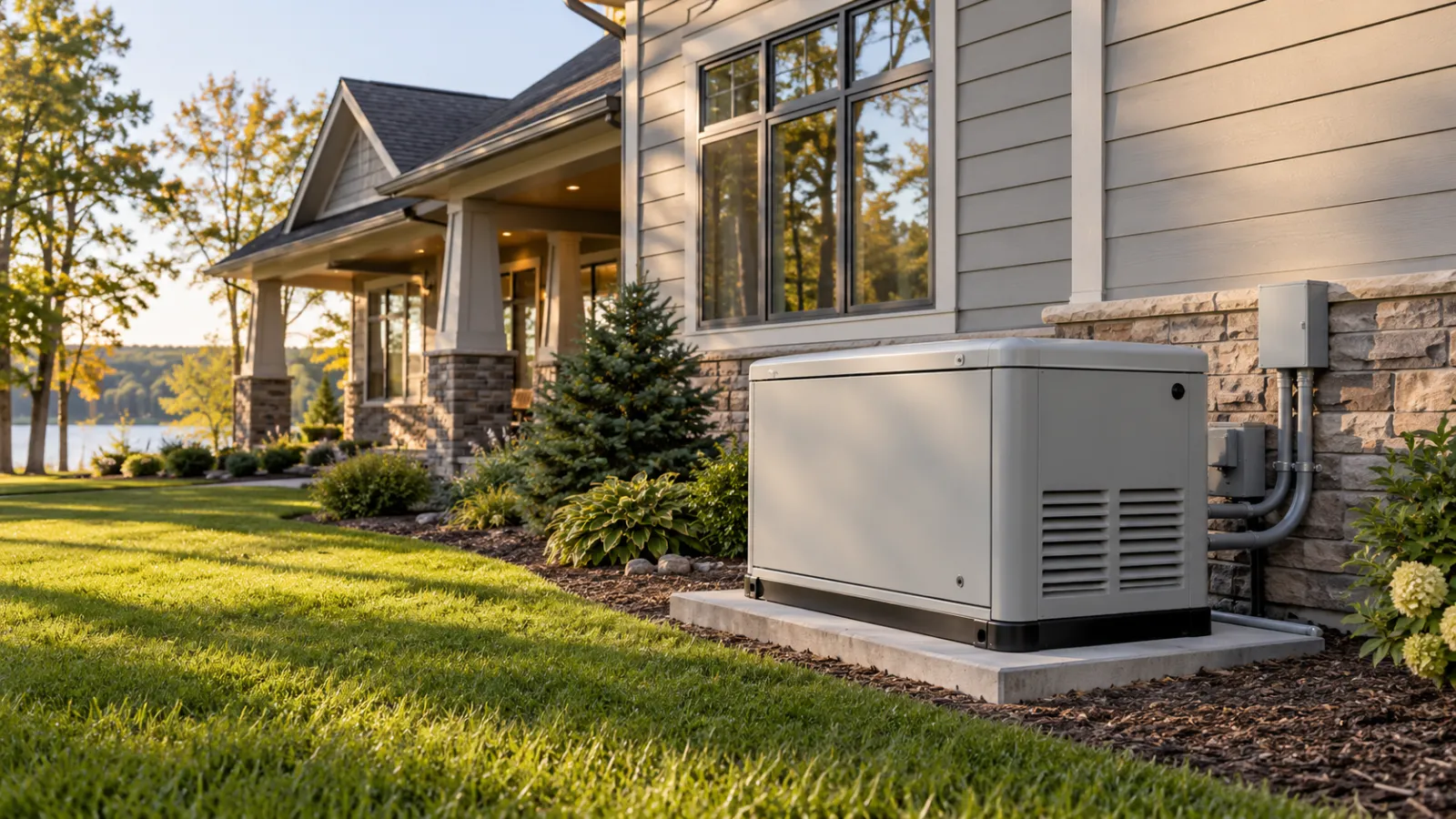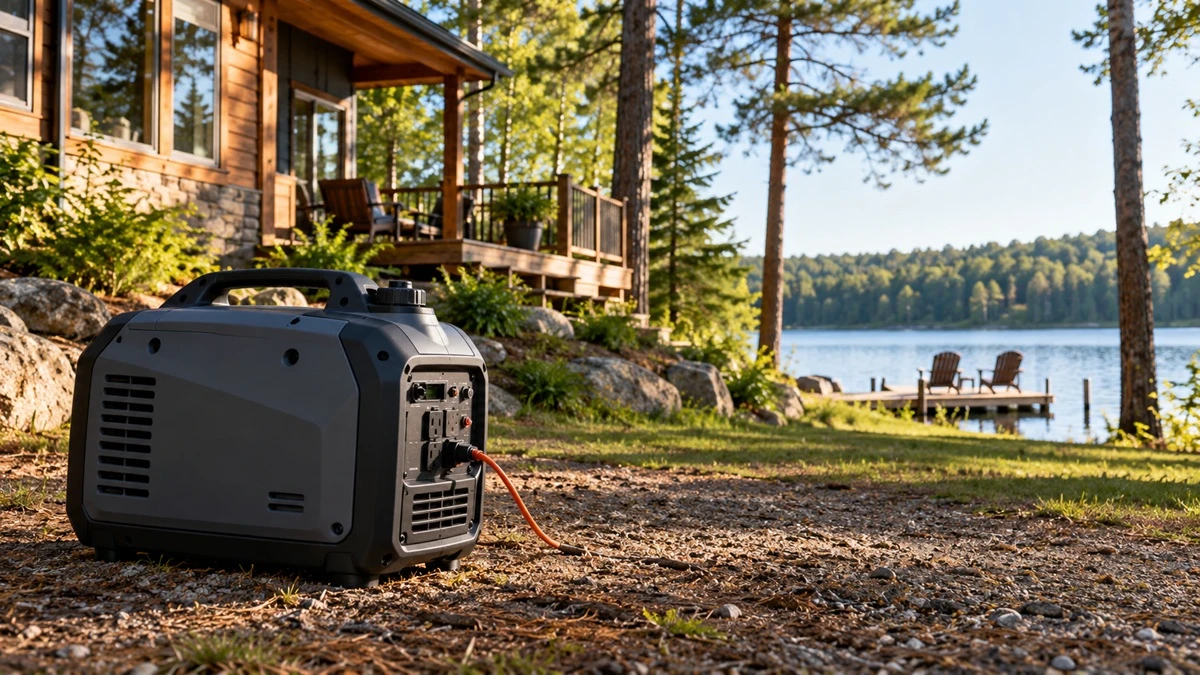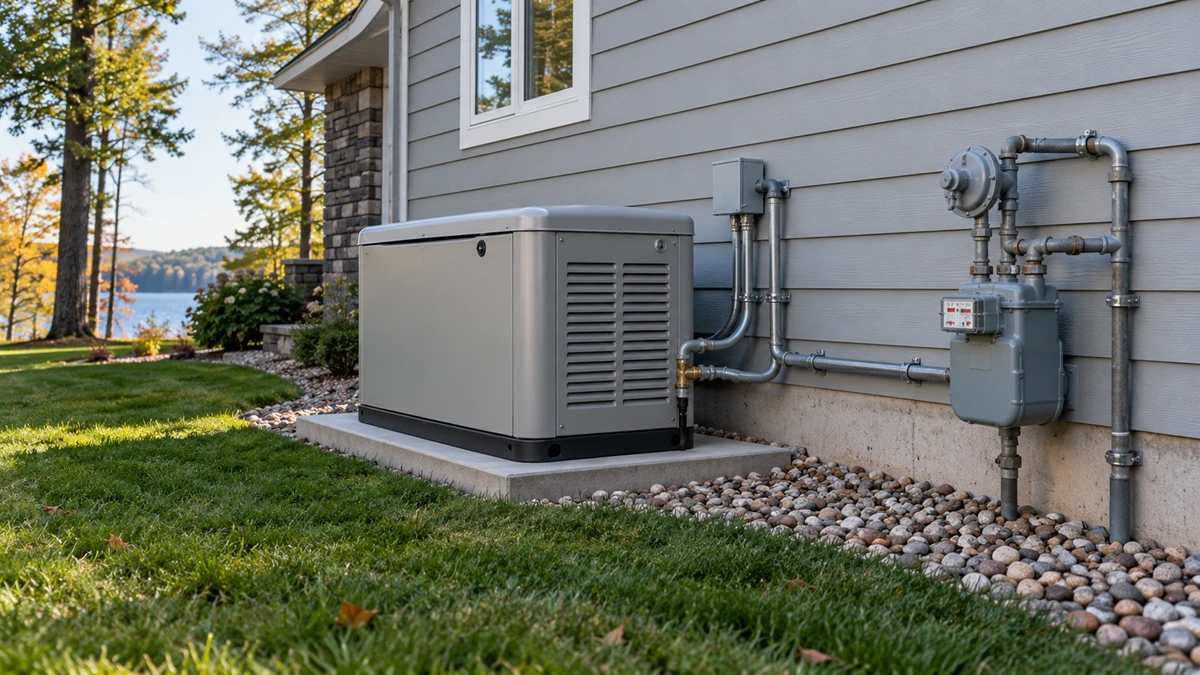

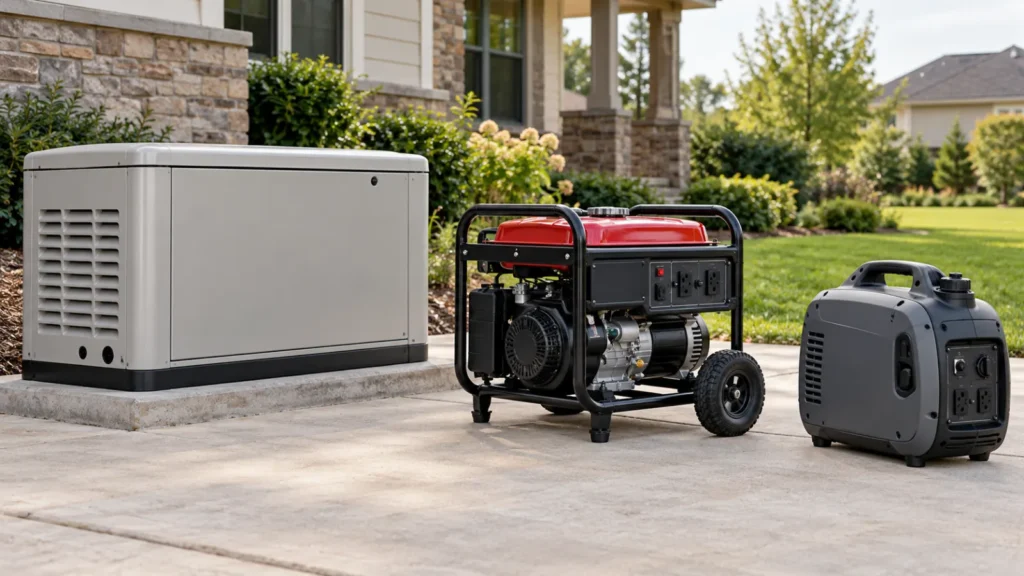
The best generator for home use is a standby generator for automatic whole-house backup, a conventional portable generator for affordable emergency power, or an inverter generator for quieter operation and smaller loads. For homeowners in Rice Lake and northwest Wisconsin, the right choice depends on heating equipment, well pumps, essential circuits, fuel access, and how long the home needs backup electricity.
No single generator is best for every property. A household that needs its furnace, refrigerator, and well pump during a winter outage has different requirements than a seasonal cabin or a home that only needs a few outlets.
This guide compares generator types, explains which models suit different needs, and identifies the features worth paying for.
What Is the Best Generator for Home Use?
The best generator for home use is one that safely powers your essential equipment during an outage without exceeding its rated capacity. Standby generators provide the most convenient backup, portable generators offer flexibility at a lower initial cost, and inverter generators are a practical choice when quiet operation and fuel efficiency matter.
Best Home Generators by Use Case
| Home backup need | Best generator type | Main advantage |
|---|---|---|
| Whole-house automatic backup | Standby generator | Starts automatically during an outage |
| Furnace, refrigerator, and selected circuits | Portable generator | Lower initial equipment cost |
| Small appliances and electronics | Inverter generator | Quiet operation and stable power |
| Rural home with a private well | Standby or large portable | Can support higher starting loads when sized correctly |
| Lake cabin or seasonal property | Inverter or portable | Flexible, limited-load backup |
| Extended winter outages | Standby generator | Automatic operation and a connected fuel supply |
The best overall option for a primary residence with critical electrical needs is generally a professionally installed standby generator.
For homeowners who only need occasional backup power, a portable or inverter generator can provide adequate coverage without the cost of a permanent standby installation.
What Is the Best Whole House Generator?
The best whole house generator is a standby system sized for the home’s electrical demand and connected through an automatic transfer switch. These generators can restore power without manual startup and are well suited to Wisconsin homes that depend on electric well pumps, heating controls, sump pumps, and other essential equipment.
Cummins QuietConnect Standby Generators
For Meyers Electric customers, the Cummins QuietConnect lineup is a relevant whole-house backup option.
Meyers Electric’s generator installation service identifies Cummins standby systems as part of its residential backup power offering.
Common models include:
| Generator | Nominal output | Suitable application |
|---|---|---|
| Cummins RS13A | 13 kW | Selected home loads and smaller backup requirements |
| Cummins RS17A | 17 kW | Homes with moderate electrical demand |
| Cummins RS20A | Up to 20 kW | Larger groups of essential circuits or whole-home applications |
| Cummins RS25 | 25 kW | Homes with higher simultaneous electrical demand |
Nominal model ratings are not a substitute for a load calculation. Output can differ by fuel type and model configuration. The appropriate unit depends on actual connected loads.
Why Choose a Standby Generator?
A standby system offers several advantages:
- Automatically detects a utility power outage.
- Starts and transfers supported loads through an automatic transfer switch.
- Operates on an approved natural gas or propane connection.
- Provides backup without moving equipment outdoors or manually connecting appliances.
- Can support critical systems when nobody is home.
Standby generators also require professional installation, a suitable outdoor location, fuel connections, regular servicing, and applicable electrical permits.
For a home in Barron County where heat and water depend on electricity, automatic backup can be especially valuable during freezing conditions.
What Is the Best Portable Generator for Home Use?
The best portable generator for home use delivers enough running and starting power for essential appliances while remaining practical to operate outdoors. A conventional portable generator is a strong option for households that need temporary backup for refrigerators, pumps, lighting, or selected circuits and do not require automatic power restoration.
Onan Portable Generator Options
Meyers Electric lists the following Onan portable generators among its generator offerings.
Onan P9500DF
A higher-output dual-fuel portable generator for demanding backup loads. It offers gasoline and propane flexibility but requires manual deployment and fuel management.
Onan P5000iDF EFI
A dual-fuel inverter generator with electronic fuel injection, suited to homeowners who value fuel flexibility and inverter-style power delivery.
Onan P4500iDF
A portable dual-fuel inverter model suited to smaller backup loads where reduced operating noise matters.
When Does a Portable Generator Make Sense?
A portable generator works well when:
- Outages are infrequent or relatively short.
- Only a limited number of appliances need electricity.
- Someone is available to deploy and refuel the generator.
- The property has a safe outdoor operating location.
- The homeowner wants backup power without a permanent standby unit.
A portable generator cannot be connected directly to home wiring through an ordinary wall outlet. A licensed electrician must install the appropriate transfer equipment or approved interlock arrangement when a portable generator will supply household circuits.
What Is the Best Inverter Generator for Home Use?
The best inverter generator for home use is one that balances quiet operation, stable electricity, fuel consumption, and enough capacity for the intended appliances. Inverter generators are especially useful for electronics, seasonal cabins, camping equipment, and smaller emergency loads where a conventional generator’s larger capacity is unnecessary.
Inverter Generator Picks by Need
| Model | Best use |
|---|---|
| Onan P2500i | Small emergency loads and recreational use |
| Onan P4500i | Portable power for appliances and electronics |
| Onan P4500iDF | Inverter backup with gasoline and propane options |
| Onan P5000iDF EFI | Higher-output inverter applications with dual-fuel flexibility |
Inverter generators use electronic power conversion to produce regulated AC electricity. Many models also vary engine speed with demand, improving efficiency and reducing noise at lighter loads.
Inverter or Conventional Generator: Which Is Better?
Choose an inverter generator when quieter operation, portability, and smaller loads are the priorities.
Choose a conventional portable generator when greater output per dollar is the priority.
Choose a standby generator when automatic home backup is essential.
A small inverter generator cannot reliably operate an entire house simply because it produces high-quality electricity. Its running capacity and available outlets still determine what it can power.
For more detail on noise comparisons, see Meyers Electric’s quietest generator guide.
How Do You Determine the Best Generator Size for Your House?
The best generator size depends on the appliances you need during an outage, their combined running wattage, and the additional power required when motors start. A licensed electrician can calculate these loads and determine whether a smaller essential-circuit generator or a larger whole-house system is appropriate.
Understand Running Watts and Starting Watts
Running watts measure the electricity equipment uses during normal operation.
Starting watts represent the additional power certain appliances require briefly when their motors start.
For example, refrigerators, air conditioners, sump pumps, and well pumps can draw more power during startup than during normal operation.
Typical Household Power Requirements
| Appliance | Illustrative running watts |
|---|---|
| Refrigerator | 150–800 W |
| Gas furnace blower | 400–800 W |
| Sump pump | 500–1,500 W |
| Microwave | 800–1,500 W |
| LED lighting | 50–200 W |
| Well pump | 700–2,000 W |
| Electric water heater | 3,000–5,500 W |
Illustrative ranges only, not verified equipment ratings. Actual wattage and starting demand depend on the appliance, motor, and installation. Use equipment nameplates and a professional load assessment for generator sizing.
How to Calculate Home Backup Power Needs
- Identify essential equipment. List everything that must operate during an outage, including heating controls, refrigeration, pumps, and necessary medical equipment.
- Record electrical ratings. Check each appliance’s nameplate for its voltage, amperage, or wattage.
- Account for startup demand. Include motor starting requirements and loads that can run simultaneously.
- Decide which circuits need backup. Separate essential circuits from optional appliances.
- Have an electrician evaluate the system. Confirm generator capacity, transfer equipment, fuel supply, and load-management requirements.
A home’s main electrical service rating does not tell you exactly how large its backup generator must be.
A 200-amp service panel, for example, does not automatically mean the property needs a generator capable of supplying 200 amps continuously.
Which Generator Fuel Type Is Best for Home Use?
The best generator fuel depends on local availability, expected outage duration, storage requirements, and the generator’s operating characteristics. Natural gas is convenient for properties with suitable utility service, propane works well for rural homes with storage tanks, and gasoline is common in portable generators intended for temporary use.
Generator Fuel Comparison
| Fuel | Advantages | Limitations |
|---|---|---|
| Natural gas | Connected supply; no on-site refilling under normal conditions | Requires available gas service; supply can be interrupted |
| Propane | On-site storage; useful for rural properties | Requires sufficient tank capacity and fuel deliveries |
| Gasoline | Widely available for portable models | Requires safe storage, maintenance, and manual refueling |
| Diesel | Common in larger-duty applications | Fuel maintenance, emissions, and additional equipment considerations |
For rural properties around Rice Lake and Barron County without natural gas service, a propane-fueled standby generator is often a practical option.
However, propane tank capacity and vaporization performance need careful assessment for cold-weather operation. A generator must receive adequate fuel under the expected winter temperature and load conditions
Who Makes the Best Home Generator?
The best home generator manufacturer is the one offering suitable capacity, dependable local service, appropriate warranty terms, and accessible replacement parts. Cummins, Generac, Kohler, Briggs & Stratton, and Honda are established names across different generator categories, but the best brand depends on the intended use and available installation support.
Popular Generator Brands Compared
| Manufacturer | Notable product category | Buying consideration |
|---|---|---|
| Cummins | Residential standby and Onan portable systems | Standby capability and local installation support |
| Generac | Home standby generators | Model capacity, dealer service, monitoring |
| Kohler | Residential standby systems | Engine performance and service availability |
| Briggs & Stratton | Standby and portable generators | Equipment options and service coverage |
| Honda | Portable inverter generators | Low-noise portable power |
Which Generator Has the Best Warranty and Customer Support?
There is no universal winner for generator warranties. Coverage varies by manufacturer, model, registration requirements, maintenance conditions, and whether the equipment is used for residential or commercial purposes.
Before purchasing, compare:
- Warranty duration and included components.
- Labor, travel, and service-call coverage.
- Authorized service availability near Rice Lake.
- Maintenance requirements and exclusions.
- Replacement-part availability.
- Transfer switch and installation warranties.
For northwest Wisconsin homeowners, practical access to qualified generator service should be a major part of the decision.
Meyers Electric lists Cummins generator installation and maintenance among its services. Homeowners can confirm current model availability and warranty terms directly with the company.
What Is the Best Home Backup Generator for Wisconsin Winters?
The best home backup generator for Wisconsin winters is a properly sized standby unit configured for reliable cold-weather operation and the home’s essential heating and water systems. Automatic transfer switching, suitable fuel delivery, safe outdoor placement, and maintenance readiness make a standby system particularly useful during extended cold-weather outages.
Winter Backup Priorities for Wisconsin Homes
A practical backup plan should account for:
- Heating: Furnace blowers, boiler controls, circulator pumps, and electric heating loads.
- Water: Private well pumps and pressure systems that stop without electricity.
- Basement protection: Sump pumps required during rain or snowmelt.
- Fuel: Adequate propane storage or suitable natural gas capacity.
- Snow and ice: Safe access for maintenance and unobstructed generator ventilation.
- Installation: Ground conditions, equipment clearance, approved electrical routing, and applicable permits.
For lake properties and seasonal cabins, also consider whether the building will be occupied when an outage occurs. A manually operated portable generator cannot restore power while nobody is present.
What About Generator Placement and Trenching?
Permanent standby generators require a suitable location, appropriate clearances, a stable mounting surface, and safe routing of electrical and fuel connections.
Wisconsin’s freezing conditions and varying soil types can affect installation planning. Underground electrical work must follow the applicable burial-depth and protection requirements rather than a single assumed frost-depth figure.
Meyers Electric also offers electrical digging and trenching services for projects requiring underground electrical infrastructure.
Need Help Choosing a Home Generator?
Meyers Electric helps homeowners across Rice Lake and northwest Wisconsin evaluate backup power needs, select generator equipment, and plan professional installations.
Explore our generator installation services or contact Meyers Electric to discuss a home backup power solution.
What Safety Features Should the Best Home Generator Have?
The best home generator should include appropriate overload protection, electrical grounding and bonding arrangements, safe transfer equipment, and manufacturer-required safety controls. Portable generators also need effective carbon monoxide risk protection, while standby systems require professional installation that isolates generator power from the utility supply.
Essential Generator Safety Checklist
- A properly selected transfer switch or approved interlock system for household circuit connections.
- Overload and short-circuit protection appropriate to the installation.
- Grounding and bonding configured according to the applicable electrical code.
- A safe, manufacturer-approved outdoor location.
- Working carbon monoxide alarms inside the home.
- Maintenance access and adequate ventilation.
- Professional inspection and commissioning where required.
Why Is a Transfer Switch Necessary?
A transfer switch is electrical equipment that safely selects between utility electricity and generator power.
It prevents a generator from improperly energizing utility lines, which creates a serious hazard for utility workers and nearby properties.
The applicable National Electrical Code provisions include Article 702, covering optional standby systems, and Article 445, addressing generators. Article 250 covers grounding and bonding requirements.
Wisconsin electrical installations are governed by SPS 316 and the applicable adopted NEC requirements. The state has been transitioning to the 2023 NEC, so the electrician and inspection authority should verify the enforceable edition and any Wisconsin amendments for the specific project.
Where Should a Portable Generator Be Operated?
Portable fuel-burning generators must operate outdoors, never inside a home, garage, basement, or enclosed porch.
The CDC recommends keeping portable generators at least 20 feet from windows, doors, and vents, with the exhaust directed away from the building. Its January 2026 guidance also recommends battery-powered or battery-backup carbon monoxide detectors.
Never connect a generator to a household outlet to energize the building. If electrical work is needed for generator backup, call a licensed electrician.
How Much Does a Home Generator Cost?
Home generator costs depend on equipment type, electrical capacity, fuel source, transfer equipment, installation labor, and property conditions. Portable generators generally have lower upfront equipment costs, while standby generators require a larger investment because they include permanent electrical and fuel-system installation.
What Affects the Total Cost?
| Cost factor | Portable generator | Standby generator |
|---|---|---|
| Generator equipment | Required | Required |
| Transfer equipment | Required for household circuit connection | Required |
| Electrical installation | Depends on connection method | Required |
| Concrete pad or mounting base | Usually not applicable | Commonly required |
| Permanent fuel connection | Not typical | Required |
| Trenching | Depends on site | Depends on site |
| Permits and inspections | Depends on electrical work | Generally required |
| Regular maintenance | Required | Required |
A low purchase price does not automatically make a generator the most economical option over its service life.
Operating fuel costs, maintenance, service availability, and the amount of backup coverage all affect long-term value.
For an accurate installed price, request a property-specific estimate rather than relying on equipment-only listings.
When Is the Best Time to Buy a Home Generator?
The best time to buy a home generator is before the season when outages are most disruptive to your household. For Wisconsin homeowners, planning ahead of winter allows time to assess electrical loads, select equipment, review installation requirements, and address potential site or fuel-supply constraints.
What Should You Check Before Buying?
Before choosing a generator, confirm:
- Which appliances and circuits must remain operational.
- Whether automatic backup is necessary.
- Which fuel sources are available on the property.
- How much noise the generator produces at the relevant operating load.
- Whether reliable maintenance and repairs are available locally.
- What the complete installed system will cost.
For a northwest Wisconsin residence, schedule planning before extended freezing weather rather than waiting until the power has already failed.
A professionally installed standby system is usually the strongest long-term solution where outages threaten heating, water supply, or other essential household functions.
FAQs
What Is the Best Generator for a House?
The best generator for a house is a standby generator when automatic backup is the priority. For households needing only a refrigerator, furnace blower, lights, and a few appliances, a properly sized portable generator can be sufficient. Choose based on electrical load rather than advertised generator wattage alone.
What Is the Best Home Generator on the Market?
There is no single best home generator on the market for every application. Cummins, Generac, Kohler, and Briggs & Stratton offer standby generator options, while Honda and Onan offer portable inverter models. Compare usable output, local service, installation compatibility, and warranty coverage before buying.
Can a Portable Generator Power a Whole House?
A sufficiently large portable generator can supply substantial household loads through professionally installed transfer equipment. Whether it can power the entire home depends on the home’s simultaneous electrical demand. Electric heating, central air conditioning, well pumps, and large appliances can exceed the capacity of typical portable models.
What Is the Best Generator for a Home in Rice Lake, WI?
A standby generator is generally the best choice for a Rice Lake home that requires automatic heating, water, and refrigeration backup. Properties with fewer essential electrical loads can use portable or inverter generators. Meyers Electric can evaluate electrical demand and recommend a suitable generator installation.
Are Propane Generators Good for Rural Wisconsin Homes?
Yes. Propane standby generators are a practical choice for rural Wisconsin homes without natural gas service. They use stored fuel and can provide automatic backup electricity when properly installed. The tank must be sized for the expected fuel demand and winter operating conditions.
Which Generator Is Best for a Lake Cabin in Barron County?
An inverter generator is a good choice for a lake cabin with limited appliance loads, especially where low noise is a priority. A standby generator is better for properties that need automatic backup when unoccupied. The right selection depends on heating, well pumps, refrigeration, and electrical equipment.
How Long Can a Whole House Generator Run During an Outage?
A whole-house standby generator can operate through extended outages when it has sufficient fuel, remains within its rated capacity, and follows manufacturer operating and maintenance requirements. Propane runtime depends on tank capacity and fuel consumption. Natural gas systems depend on available gas service and pressure.
Conclusion
The best generator for home use depends on how much electricity your home requires and how automatically you want backup power restored.
Choose a standby generator for dependable automatic home backup, a conventional portable generator for higher-output temporary power, or an inverter generator for quieter operation and smaller loads.
For homeowners in Rice Lake, Barron County, and northwest Wisconsin, winter heating demands, private wells, fuel availability, and safe installation should guide the final decision.
Meyers Electric provides generator installation and service across northwest Wisconsin. Contact Meyers Electric to discuss the backup power requirements for your property.