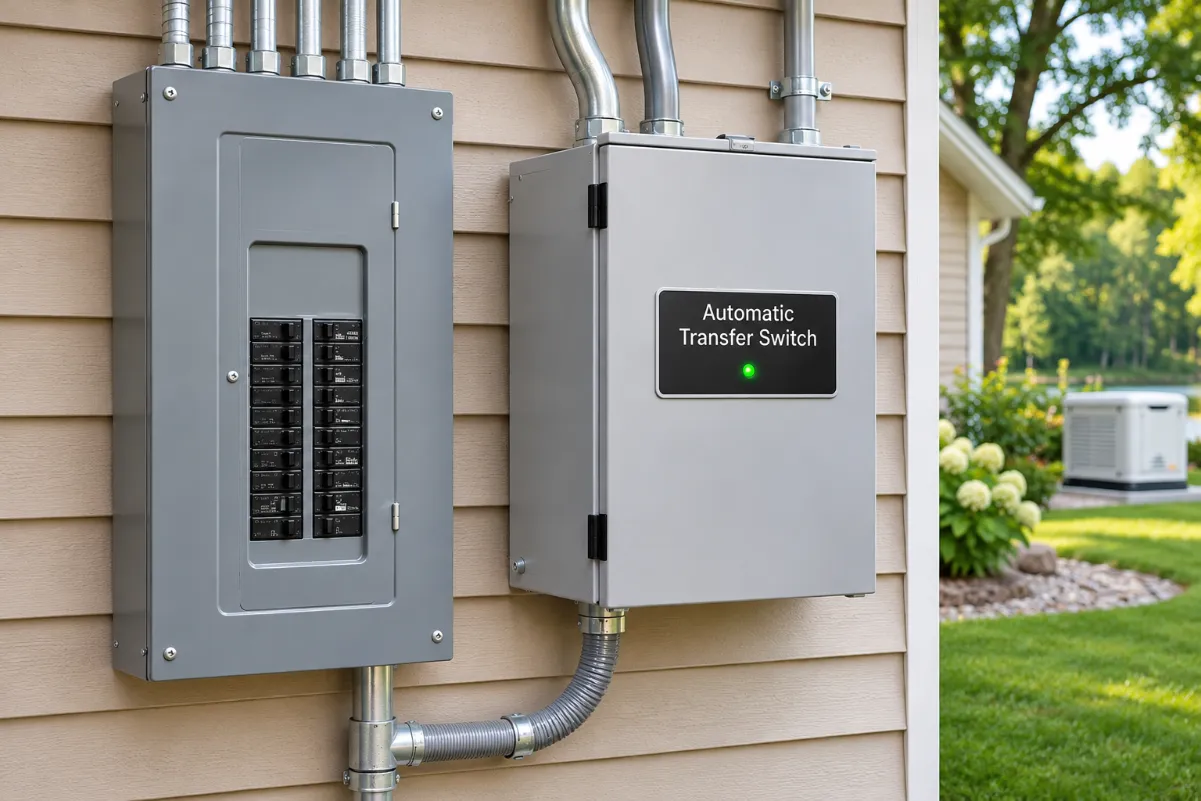

What is a transfer switch? It is a device that connects your home to either utility power or generator power, never both at once. That one-source-at-a-time rule keeps your generator from sending electricity back into the power lines, which protects line workers, your neighbors and your equipment.
Ice storms and high winds can knock out power across Northwestern Wisconsin for days. Meyers Electric has served Rice Lake and the surrounding area since 1986. This guide covers how the device works, how manual and automatic versions differ, where a generator interlock fits and the safety rule behind all of it.
Table of Contents
What is a transfer switch?
A transfer switch is an electrical device that connects your home or building to either utility power or generator power, one source at a time. It is the safe link between a backup generator and your wiring. Without it, a generator has no safe way to power your hardwired circuits.
The circuits an outage hurts most, like your furnace, well pump, sump pump and freezer, are wired into your building. An extension cord cannot reach them. A transfer switch lets a generator feed them safely. It comes in two types, manual and automatic, and a third option, the generator interlock, does the same isolating job.
How does a transfer switch work?
A transfer switch works by disconnecting your circuits from the utility before it connects them to the generator. Only one power source is ever live on those circuits. When utility power returns, the switch reverses the order. That design is what prevents backfeed.
Here is the sequence in plain terms:
- Utility power fails.
- The switch isolates your wiring from the power lines.
- The generator supplies the circuits the switch serves.
- Utility power returns, and the switch moves the load back to the grid.
The Electrical Safety Foundation International (ESFI) says transfer switches, whether manual or automatic, are the only way to safely power your home’s electrical system from a generator (opens in new tab). Your generator cannot energize the lines a utility crew is repairing.
Manual vs automatic transfer switch
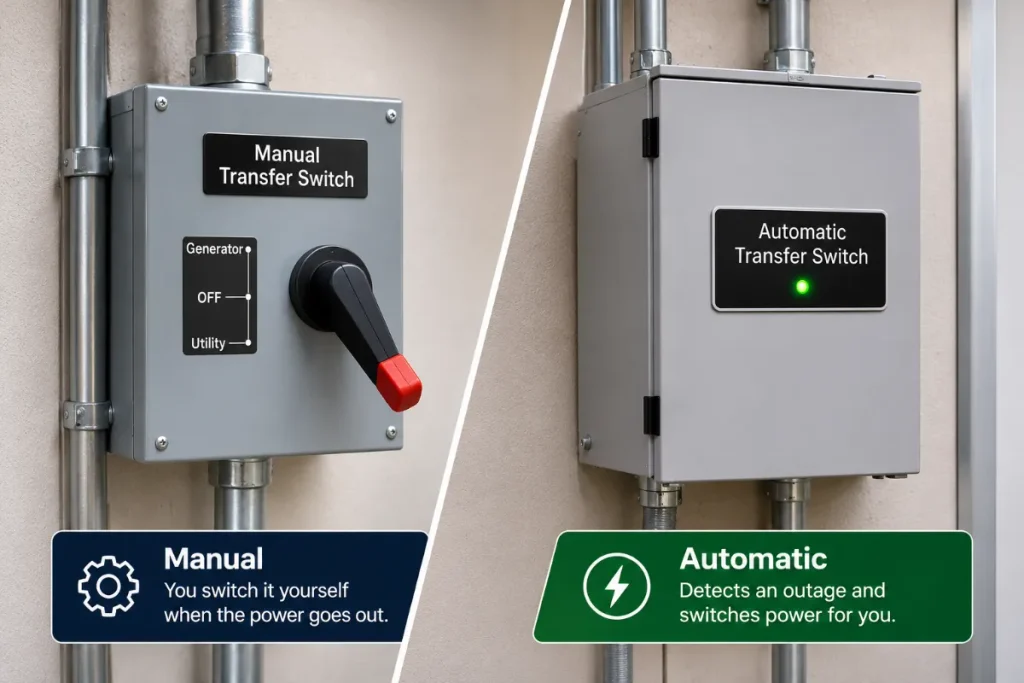
A manual transfer switch needs you to start the generator and move the switch yourself. An automatic transfer switch detects the outage, starts a standby generator and transfers the load without you. Manual suits portable generators. Automatic suits standby generators and homes that no one can watch full time.
| Manual transfer switch | Automatic transfer switch | |
|---|---|---|
| How it starts | You start the generator, then move the switch | The switch senses the outage and signals the generator to start |
| Who operates it | You | The system, with no action from you |
| Best for | Portable generators powering selected circuits | Standby generators, farms, cabins, shops and businesses |
| Works when you’re away | No. Someone has to be there | Yes. It runs on its own |
| Speed of restoring power | After you reach the switch | Within seconds of an outage |
What is an automatic transfer switch?
An automatic transfer switch (ATS) is a switch with a built-in controller that watches utility power. When power drops, it signals your standby generator to start, then transfers the load once the generator is ready. When utility power returns, it switches back and lets the generator shut down.
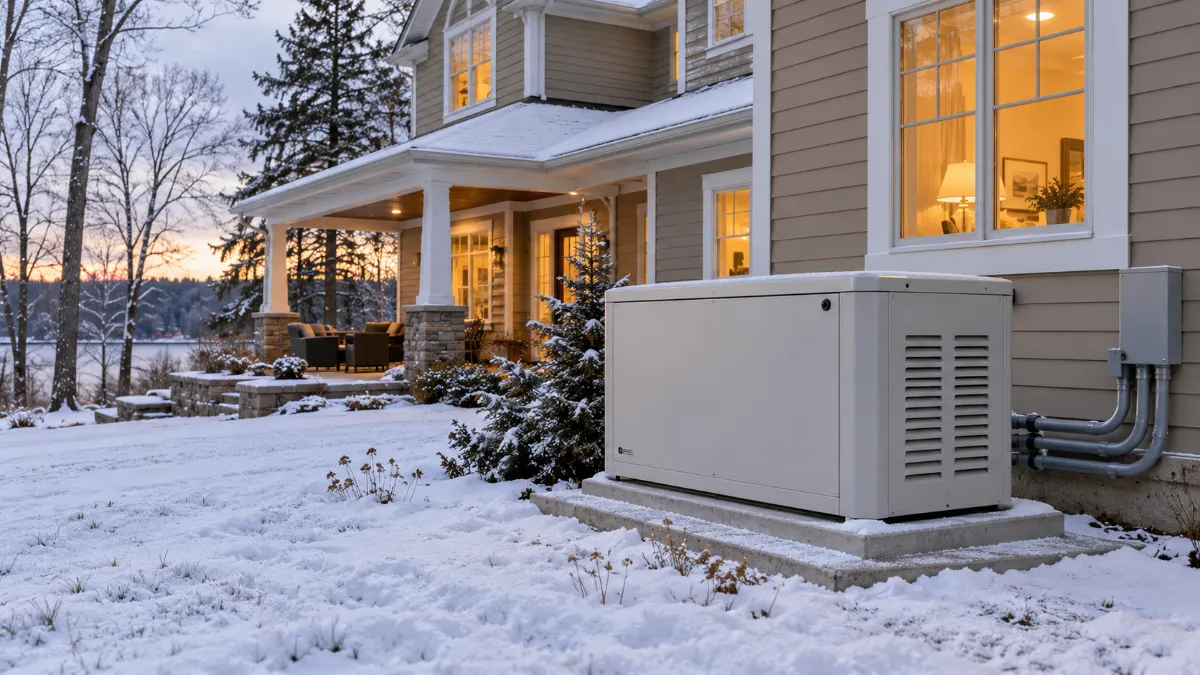
This is the setup behind how a generator starts automatically during an outage. Standby generators, including the Cummins units Meyers installs, rely on an ATS. If your barn or lake cabin sits empty part of the year, this is the type that keeps the sump pump running.
What is a generator interlock, and how is it different?
A generator interlock is a mechanical device on your main electrical panel that physically prevents the main breaker and the generator breaker from being on at the same time. It isolates your home from the utility like a transfer switch does, but it does not choose circuits or start anything on its own.
A transfer switch serves a set group of circuits, so the load stays within what the generator can handle. With a generator interlock, you manage the load yourself. An interlock also has to be made for your exact panel brand and model, which is one more reason this is licensed work.
Why should you never connect a generator without one?
A generator connected to house wiring without a transfer switch or interlock can backfeed, sending electricity out through your meter and onto the power lines. That current can electrocute line workers and neighbors on the same transformer. It can also bypass your home’s built-in circuit protection and start a fire.
The U.S. Consumer Product Safety Commission is direct about it. Its portable generator safety alert (opens in new tab) warns that plugging a generator into a wall outlet to power house wiring is extremely dangerous and puts utility workers and neighbors at risk of electrocution.
The National Electrical Code (NFPA 70), Article 702, covers optional standby systems like a home generator. It calls for transfer equipment designed and installed to prevent the inadvertent interconnection of utility and generator power. That is the code behind every transfer switch and interlock.
Never plug a generator into a wall outlet to power your house. There is no safe shortcut, and we will not describe one.
Which one do you need: portable generator or standby generator?
If you own a standby generator, you need an automatic transfer switch. If you own a portable generator and want to power hardwired circuits, you need a manual transfer switch or a code-compliant generator interlock. Either way, a licensed electrician installs it.
Here is how it breaks down:
- Standby generator: An automatic transfer switch is part of the system and handles the switchover for you.
- Portable generator powering hardwired circuits: A manual transfer switch or a generator interlock is required. This covers furnaces, well pumps and other circuits wired into the building.
- Portable generator with extension cords only: No switch is involved because the generator never touches your house wiring. Keep it outdoors, at least 20 feet from your home per the CPSC. Our guide on how far a generator should be from your house covers placement.
Who should install a transfer switch? (When to call a licensed electrician)
A licensed electrician should install every transfer switch and interlock. The work ties directly into your main panel, and a mistake can electrocute you or a line worker. In Wisconsin, the licensed contractor also pulls the permit and the work is inspected under the state electrical code, SPS 316.
Wis. Stat. 101.862 (opens in new tab) says no one may install, repair or maintain electrical wiring unless licensed or registered as an electrician. Local permit rules vary by town, and your electrician knows what yours requires.
Call a licensed electrician when:
- You own a portable generator and want it to power your furnace, well pump or other hardwired circuits.
- You are buying a standby generator and need the transfer switch installed with it.
- You are not sure whether your setup has a transfer switch or interlock.
If you smell burning, see sparking or find downed lines, leave the area and call 911 first, then call Meyers at (715) 234-3901.
Ready to plan your setup? See our generator installation services in Northwestern Wisconsin, or use Book a Generator Consultation to talk through the right setup for your home.
Frequently Asked Questions
What is a transfer switch?
A transfer switch is an electrical device that connects your home to either utility power or generator power, one at a time. It prevents a generator from feeding electricity back into the power lines. Manual versions are flipped by hand, and automatic versions switch on their own when the power fails.
Do I need a transfer switch for a portable generator?
You need one, or a generator interlock, if you want a portable generator to power hardwired circuits like a furnace or well pump. If you only run appliances through extension cords, the generator never touches your house wiring, so no switch is needed. Never plug a generator into a wall outlet.
What is the difference between a transfer switch and an interlock?
Both keep utility and generator power from feeding your wiring at the same time. A transfer switch moves a chosen group of circuits between the two sources. A generator interlock is a mechanical device on your main panel that blocks both breakers from being on together. Interlocks leave load management to you.
How does an automatic transfer switch know the power is out?
An automatic transfer switch has a controller that constantly monitors utility voltage. When voltage drops or disappears, it waits a short moment to confirm a real outage, then signals your standby generator to start. Once the generator is ready, it transfers the load and switches back when utility power returns.
Can I install a transfer switch myself?
No. A transfer switch ties into your main electrical panel, and mistakes can cause electrocution, fire or backfeed that endangers line workers. Wisconsin law generally requires wiring work to be done by licensed electricians, and the job needs a permit and inspection. Hire a licensed electrician.
Conclusion
If you were asking “what is a transfer switch,” the short answer is that it is the part that makes backup power safe, whether manual or automatic. Book a Generator Consultation with Meyers Electric or call (715) 234-3901 to find the right setup for your home in Northwestern Wisconsin.