
Commercial EV charging stations cost anywhere from $4,000 to $60,000 per unit installed, depending on charger type, electrical capacity, trenching needs, and site preparation
Table of Contents
EV Charging Station Cost
Basic Level 2 chargers installed at small businesses may cost around $4,000 to $10,000, while high powered DC fast chargers installed at retail centres, fleets, or highway locations can exceed $40,000 to $60,000 or more once electrical upgrades and installation are included.
For businesses across Northwestern Wisconsin, EV charging is quickly shifting from a convenience feature to a practical infrastructure investment.
Electric vehicles are becoming common in communities like Siren, Webster, Cameron, and Minong, and commercial properties are beginning to adapt by adding charging stations for customers, employees, and fleet vehicles.
Understanding the real cost behind a commercial EV charging installation requires looking beyond the charger itself. Equipment, electrical upgrades, permitting, trenching, and long term energy capacity all influence the final project price.
Why Businesses Are Installing EV Charging Stations
Commercial EV charging stations are increasingly being installed in locations where vehicles remain parked for extended periods, making charging more convenient and accessible for users. Common locations include hotels, grocery stores, campgrounds, office buildings, municipal facilities, and apartment complexes.
As the demand for sustainable infrastructure grows, many of these sites are now integrating ev charging and smart upgrades, combining advanced energy management systems, smart monitoring, and efficient charging solutions to enhance user experience while supporting modern energy needs.
Businesses install chargers for several practical reasons.
- First, EV charging attracts customers who often stay longer while their vehicles charge. That additional time frequently turns into additional spending.
- Second, commercial properties that provide charging become more appealing to tenants, employees, and visitors.
- Third, fleets transitioning to electric vehicles require dependable charging infrastructure to maintain daily operations.
Across Northwestern Wisconsin, where travel distances between towns can be significant, reliable charging stations also help support regional transportation infrastructure.
Types of Commercial EV Chargers and Their Costs
Not every charger is designed for the same type of business. Charger speed, power demand, and installation complexity all influence cost.
Level 2 Commercial Chargers
Level 2 chargers are the most common commercial option. They operate on 240 volt electrical systems and typically provide 20 to 40 miles of driving range per hour of charging.
These chargers are commonly installed at:
- Restaurants
- Retail centers
- Office buildings
- Hotels
- Apartment complexes
Typical cost breakdown:
- Equipment: $1,500 to $6,000
- Installation: $2,500 to $6,000
- Total installed price: $4,000 to $12,000
Because Level 2 chargers require less electrical infrastructure, they are often the most affordable entry point for businesses exploring EV charging.
DC Fast Chargers
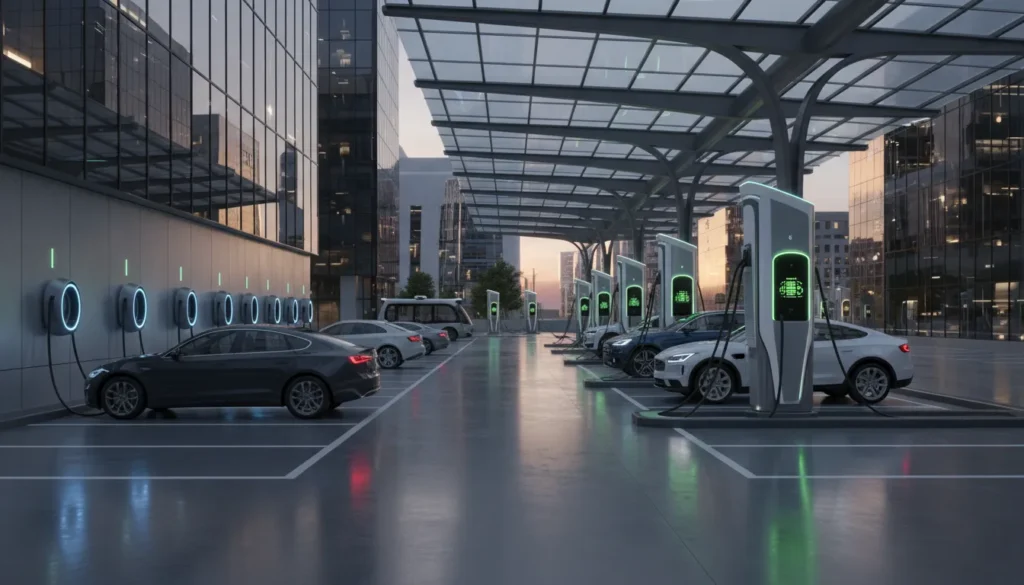
DC fast chargers deliver significantly more power and charge vehicles rapidly. These stations can recharge most EV batteries to 80 percent in 20 to 45 minutes.
They are usually installed at:
- Travel centers
- Fleet depots
- Highway corridors
- Commercial fueling locations
Typical cost breakdown:
- Equipment: $20,000 to $45,000
- Installation: $15,000 to $40,000
- Total installed price: $35,000 to $85,000
Electrical upgrades are often required for fast chargers because they demand large amounts of power.
Electrical Infrastructure Costs
One of the most important parts of EV charging installation is the electrical capacity of the building. Many commercial buildings were not originally designed to support EV charging loads, which makes proper assessment essential before moving forward.
When evaluating the cost of installing EV charger, electrical capacity plays a major role. If the existing system cannot handle the additional demand, upgrades such as panel replacements, transformer enhancements, or new circuit installations may be required. These improvements can significantly impact both the overall project timeline and budget.
In cases where power capacity is limited, careful load management strategies or phased installation approaches can also be considered to optimize performance while controlling costs.
Possible infrastructure expenses include:
- Electrical panel upgrades
- Transformer upgrades
- New electrical service lines
- Load management systems
- Distribution panels and breakers
These upgrades may add anywhere from $2,000 to $25,000 depending on the building’s existing electrical system.
For properties in rural areas like Minong or Webster, distance from the electrical service point can also affect installation cost.
Installation and Site Preparation Costs
Beyond electrical work, several physical construction tasks are usually required.
Commercial EV charging stations may require:
- Concrete pads
- Parking lot trenching
- Protective bollards
- Signage and striping
- Network communication setup
- Weather protection hardware
Typical installation tasks can cost between $3,000 and $20,000 depending on site complexity.
Parking lots that require trenching across asphalt or long conduit runs can significantly increase the installation budget.
Permits, Engineering, and Inspection Costs
Most municipalities require permits and inspections before EV charging stations can operate.
Costs may include:
- Electrical permits
- Engineering plans
- Utility coordination
- Inspection fees
These costs usually range from $500 to $3,000 depending on project size and local requirements.
Local electricians familiar with permitting processes in communities like Cameron or Siren can help streamline approvals and prevent costly delays.
Utility Capacity and Power Demand
Another factor influencing commercial charging station cost is available power capacity.
EV chargers draw substantial electricity, particularly fast chargers. Businesses must ensure their electrical service can support the additional load.
In some cases utilities may require:
- Load studies
- Transformer upgrades
- Service line expansions
These upgrades can add thousands of dollars to the project but are necessary to maintain electrical safety and reliability.
Incentives and Rebates That Reduce Costs
Government incentives can significantly reduce the cost of EV charging installations.
Businesses may qualify for:
- Federal EV infrastructure tax credits
- State clean energy rebates
- Utility charging station incentives
- Local business development grants
These incentives can reduce project costs by 20 percent to 50 percent, depending on program availability.
Because incentives frequently change, working with an experienced electrical contractor can help identify available programs before installation begins.
Calculating the Charging Station Investment Cost
Businesses evaluating EV charging often focus on equipment price alone. The real charging station investment cost includes several components.
- Equipment
- Electrical installation
- Infrastructure upgrades
- Permits and inspections
- Utility coordination
Network software and monitoring
A realistic project budget for a small business installing two Level 2 chargers might look like this:
- Charging equipment: $5,000
- Electrical installation: $6,000
- Trenching and site prep: $3,000
- Permits and design: $1,000
Total estimated project cost: $15,000
Larger commercial properties installing multiple chargers can scale projects efficiently by sharing infrastructure.
Long Term Operating Costs
Once installed, EV chargers have relatively low operating costs compared to fuel infrastructure.
Ongoing expenses typically include:
- Electricity usage
- Network software fees
- Maintenance and inspections
- Payment processing systems
Electricity costs vary depending on utility rates and charging volume, but many businesses offset these costs by charging users for electricity.
Some businesses also offer charging as a complimentary service to attract customers and improve property value.
Planning EV Charging for Businesses in Northwestern Wisconsin
Businesses across Northwestern Wisconsin are beginning to adopt EV infrastructure as electric vehicle ownership grows.
Communities such as Siren, Webster, Cameron, and Minong are experiencing increased EV traffic from tourism, commuting, and regional travel.
Installing EV chargers helps local businesses support visitors and residents while staying ahead of future transportation trends.
Working with an experienced electrical contractor helps ensure installations meet safety codes, electrical capacity requirements, and long term operational needs.
Businesses searching for a commercial electrician near me to plan EV charging infrastructure often benefit from contractors who understand both electrical systems and EV technology.
For businesses considering EV charging installations, consulting a local professional such as Meyers Electric can help evaluate site conditions, electrical capacity, and cost projections.
Businesses can also contact 715-234-3901 to discuss installation planning and infrastructure readiness.
FAQs
How much space is needed for a commercial EV charger?
Most commercial charging stations require one dedicated parking space per charger along with clearance for cables and vehicle manoeuvring. Some installations also include protective bollards and signage to keep charging areas accessible.
Do EV charging stations increase property value?
Many commercial property owners find that EV chargers increase property attractiveness for tenants and customers. Businesses that offer charging often see longer customer visits and improved tenant satisfaction.
Can businesses charge customers for electricity?
Yes, most commercial EV chargers include payment systems that allow businesses to charge per kilowatt hour, per session, or per hour of charging time.
How long does it take to install a commercial charging station?
Installation timelines depend on electrical upgrades, permitting approvals, and site preparation. Small Level 2 installations may take one to two weeks, while larger fast charging installations can take several months.
Conclusion
Commercial EV charging stations are becoming an important piece of infrastructure for businesses preparing for the future of transportation.
While equipment costs often receive the most attention, the total project price includes electrical upgrades, installation work, permits, and long term energy capacity.
For most businesses, installed costs typically range between $4,000 and $12,000 for Level 2 chargers and $35,000 or more for DC fast charging systems. Careful planning, available incentives, and proper electrical design can significantly improve the return on this investment.
Across Northwestern Wisconsin, including communities like Siren, Webster, Cameron, and Minong, EV charging stations are helping businesses serve modern travelers while supporting the region’s evolving transportation network.
For business owners considering installation, evaluating electrical capacity and planning infrastructure early can make the process smoother and more cost effective.